Team Building Games That Actually Work for In Person Virtual and Hybrid Teams

Introduction
You’ve planned a team meeting. You want to bring everyone together. But the usual icebreakers feel stale. Your team stares at their phones. Sound familiar?
Many managers and team leaders run into the same wall. They know team cohesion directly impacts productivity, retention, and innovation. Yet finding engaging, budget-friendly building team games that actually work can feel impossible. You search online, only to find fluff or activities that need expensive supplies no one has.
Here’s the thing: team building doesn’t have to be complicated or costly. The best games team building activities are often the simplest ones. They focus on real connection, not forced fun.

Whether you need a quick five-minute energizer or a deeper problem-solving challenge, the right team building game can transform how your group works together.
This guide is different. Instead of random lists, you’ll get research-backed, actionable group activities games designed for any setting: in-person, remote, or hybrid. You’ll find building team games that build trust, spark creativity, and get people talking. No more awkward silences. No more eye rolls.
We’ve tested these team building games with real teams, from startups to large corporations. They work because they respect people’s time and focus on building team games that feel natural, not forced.
Ready to ditch the boring icebreakers and find activities your team will actually enjoy? Let’s start with some quick, low-prep team building games you can use today. And if you want even more ideas, explore our full collection of team building activities to find the perfect game for your team.
Why Team Cohesion Matters: The Business Case for Building Games
You might be thinking, "Is investing time in team building games really worth it?" The short answer is yes. The numbers back it up.
Here’s what the data says in 2026. Engaged teams are 18% more productive and 23% more profitable, according to research from Archieapp. Yet Gallup reports that only 31% of U.S. employees are actively engaged at work, as noted by Paycor. That leaves a huge gap. And the cost of that gap? Gallup’s 2026 report found that low engagement cost the world economy $10 trillion in lost productivity (see Gallup for details).
Disconnected teams don’t just miss deadlines. They create friction. Poor communication and low trust lead to wasted time, higher turnover, and missed opportunities. A study from WorkTime shows highly engaged business units see 78% less absenteeism and 14% higher productivity. When people feel connected, they show up differently.
So where do building team games fit in? They are one of the most effective, low-cost ways to boost cohesion. Research from Zoom shows that engagement strategies can drive 23% higher profitability and 70% higher employee well-being. And games team building activities are simply engagement strategies in disguise. They break down barriers, build trust, and spark the kind of communication that makes teams thrive.
Think of it this way: a team that laughs together, solves problems together, and knows each other beyond job titles works better. Period. That’s why companies like McKinsey highlight that effective teams depend on high trust and communication (McKinsey). Building team games create the conditions for that trust to grow.
The business case is clear. Investing in group activities games isn’t fluff. It’s a smart financial move that pays for itself in engagement, retention, and results.
Ready to put this into practice? Start with some of our favorite low-prep team building games that build real connection without the hassle. And if you want even more ideas, explore activities designed for your team’s unique needs.
Understanding Your Team’s Needs: A Diagnostic Approach
Before you pick a fun team building game, take a step back. A game that works wonders for one group might fall flat for yours. The reason is simple. Every team has different pain points.
So how do you figure out what your team needs? You start by diagnosing the current state of communication and trust.
Here’s the thing. Many teams struggle with hidden barriers. Research from the NCBI shows that common barriers to effective communication include rigid hierarchies and unclear roles. Your team might not even realize those barriers exist until you look for them.
The smartest approach is to ask. Use anonymous surveys or run a facilitated retrospective. Ask questions like:
- Do people feel safe sharing opposing ideas?
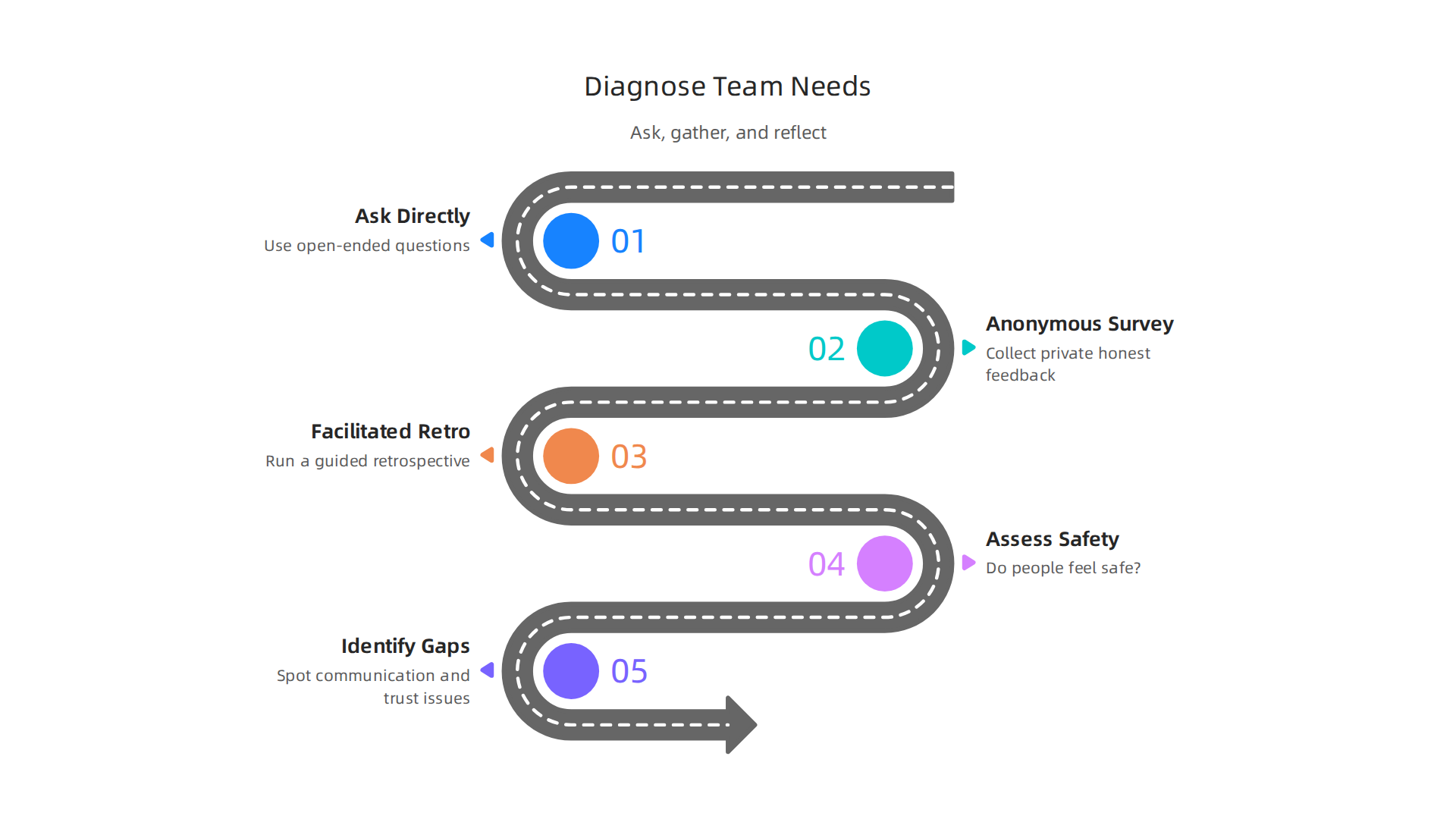
- When problems come up, does the team solve them together?
- How often do team members misunderstand each other?
This is not guesswork. It’s a low-cost way to get real data. And companies like McKinsey have found that effective teams depend on high trust and communication. Knowing where you stand helps you choose the right games team building activities.
Once you know the gaps, match your group activities games to the specific problem. For example:
- If trust is low, pick a team building game that requires vulnerability and shared risk.
- If communication is unclear, choose an activity that forces clear instructions and active listening.
- If team members feel disconnected, go for a game that builds shared stories and inside jokes.
Doing this upfront turns a random activity into a targeted tool. You’re not just playing. You’re solving a real issue.
For a deeper dive into understanding your team’s dynamics, check out our guide on how to diagnose and reshape team roles and dynamics. It walks you through the full diagnostic process.
Ready to find activities that match your team’s needs? Explore our curated collection of team building activities and pick the ones that fit your team best.
Top Building Team Games for In-Person Teams
Now that you know what your team actually needs, it’s time to pick the right building team games. In-person activities work best when they match a specific goal. Here are three proven games team building favorites that target common gaps.
Marshmallow Tower (aka Marshmallow Challenge)
This classic team building game pushes creative problem-solving. Teams get spaghetti, tape, string, and one marshmallow. They have 18 minutes to build the tallest freestanding tower. The catch? The marshmallow must sit on top. Research shows this activity reveals how teams prototype, test ideas, and handle pressure. It works especially well for groups that need to break out of rigid thinking. The Afterburner article on small group activities includes this as a top problem-solving challenge.
Blindfold Navigator
One person is blindfolded. The rest of the team must guide them through an obstacle course using only words. This group activities games exercise builds trust and forces clear communication. It directly addresses the communication barriers we talked about earlier. Your team will quickly see where instructions get confusing.
Human Knot
Everyone stands in a circle, reaches across, and grabs two different hands. Then the group must untangle themselves without letting go. It requires physical cooperation and almost always ends in laughter. This is a great team building building games activity for teams that feel disconnected and need a lighthearted shared win.
For more easy-to-run ideas, check out our collection of 10 low prep group games for adults that build real team connection. These require almost no materials and take under 15 minutes.
Ready to run one of these with your team today? Explore our full list of team building activities for more options and facilitator tips.
Virtual Building Games That Bridge the Distance
Does your team feel more like a collection of faces on a screen than a real group? You’re not alone. When your team works remote or hybrid, the usual hallway chats and quick laughs just don’t happen. That’s where building team games designed for virtual spaces come in.

They help you stay connected without adding more boring meetings.
Virtual escape rooms are one of the best games team building options for remote teams. Your group gets locked in a digital room full of puzzles and clues. Everyone has to talk, share what they see, and solve problems together. It feels like a mission, not another Zoom call. Platforms like Mockflow offer a variety of these experiences, including icebreakers, trivia, and escape rooms Virtual Team Building Games: 14 Ideas for Remote & Hybrid Teams.

Another great choice is online trivia with themed rounds. It’s fast, fun, and lets people show off their random knowledge.
Use collaboration tools for shared challenges. Instead of just talking, your team can build something together on a digital whiteboard like Miro. One simple idea: give everyone a section of a virtual board and ask them to draw their ideal vacation. Then have the team combine the pieces into one big picture. This kind of group activities games gets people creating and laughing, not just staring at slides.
Short, regular games prevent Zoom fatigue. Don’t try to fill an hour with one big activity. Instead, run a 10 minute game at the start of your weekly meeting. A quick round of "Two Truths and a Lie" or a virtual scavenger hunt works perfectly. The Atlassian team recommends keeping activities frequent but brief to keep energy high 18 high-impact virtual team building activities and games. Short bursts of fun build connection without draining everyone.
For more ideas that work across hybrid and fully remote setups, check out our guide on 10 little games for team building that build real connection. It’s full of quick, low prep activities your virtual team will actually enjoy.
Ready to turn screen time into team time? Explore Activities and find the perfect virtual game for your next meeting.
Hybrid Team Building: Games That Work for Everyone
Hybrid teams present a real puzzle. You have some people gathered in the office and others joining from their home desks. How do you run a building team games session where no one feels like a second class participant?

The answer is simple. You design every activity from the start to include both groups equally.
Design games that include both groups from the very beginning. Avoid the trap of planning an office activity and then pointing a camera at it. That leaves remote folks feeling like spectators. Instead, pick a game where everyone plays the same way, no matter where they sit. A shared scavenger hunt works great here. Give everyone the same list of items to find. People in the office search their desks and break rooms. Remote team members search their homes and neighborhoods. Everyone shares their finds in a group chat or on a video call. Watson Adventures recommends this kind of cross location scavenger hunt as a top hybrid activity 10 Hybrid Team Building Activities That are Actually Fun.
Use asynchronous challenges. Not every team building game needs to happen live on a video call. Give your team a shared task they can complete over a few days. A photo challenge where everyone captures images based on a theme works perfectly. People contribute on their own schedule. This removes the headache of finding a time that works for everyone across different time zones. Asana highlights this kind of flexible approach as a strong option for hybrid teams in 2026 45 Team building games to bring teams together at work [2026].
Rotate roles to ensure equal participation. In hybrid games, the same voices often dominate. The loud person in the office or the talkative one on camera takes over. Fight this by rotating who leads each round. Have the quiet remote person be the team captain for one challenge. Let the in-office person who sits farthest from the camera keep score. This creates a fairer experience for everyone. For more strategies on balancing participation, check out our guide on how to diagnose and reshape team roles and dynamics.
When everyone plays the same game, distance stops being a barrier. Your team becomes one group, not two.
Ready to find a hybrid activity that actually works for your whole team? Explore Activities and choose from games built for every setup.
How to Integrate Building Games into Regular Workflows
You have run a few fun team building games, and they worked. But here is the truth. A one time game is like a single workout. It feels good, but it does not change your fitness. To see real change, you need to make games a regular habit. The good news is you do not need to block off a whole afternoon. You can weave short games right into your existing meetings.
Schedule recurring short games as part of stand ups or meetings. Pick a five minute game to open your Monday stand up. A quick round of trivia or a two word story takes almost no time. It wakes everyone up and sets a positive tone. Asana even recommends using quick games during regular meetings to keep teams connected 45 Team building games to bring teams together at work [2026]. Over time, these small moments build real trust.
Align games with team goals and project milestones. When your team finishes a big project, celebrate with a short game that ties back to the work. Did you just launch a new feature? Play a themed scavenger hunt where items relate to the project. This makes the game feel meaningful, not like a pointless break. Aligning games with business goals also helps you measure their impact later.
Keep it low prep: use digital templates and minimal materials. The best building team games are the ones you can start in two minutes. Use a digital template for a virtual escape room or a shared Google Doc for a team story. You do not need fancy supplies. For more ideas that require almost no prep, check out our list of low prep group games for adults.
When games become part of your routine, your team stops seeing them as awkward events. They become something everyone looks forward to.
Ready to find quick games that fit right into your work day? Explore Activities and start small.
Measuring the Impact: Metrics That Matter
You have made building team games a regular habit. But how do you know they are actually working? The warm feeling after a fun game is nice, but it is not proof. You need real numbers and honest feedback to see if your team building building games are making a difference.
The good news is that you do not need complex data science. Start with simple metrics that show true change.
Track engagement scores and pulse surveys. After each team building game, send a quick two question survey. Ask: "How did that game make you feel?" and "Do you feel more connected to your team?" You can use a free tool like Google Forms or a Slack poll. Over time, these pulse surveys reveal trends. If scores go up month after month, your games team building strategy is working. According to Gallup’s 2026 data, just 31% of U.S. employees are actively engaged at work 21 Employee Engagement Statistics to Know in 2026 – Paycor. Small wins from regular team building games can help close that gap.
Monitor retention rates and turnover. Team members who feel connected to their coworkers are far less likely to leave. Compare your team’s turnover rate before and after you started using games. Even a small drop in turnover saves your organization money and time. Research shows that highly engaged business units see 78% less absenteeism Workplace productivity statistics 2026: 30+ key insight – WorkTime. That is a metric worth watching.
Quantify project cycle time and collaboration. Do projects finish faster now? Are there fewer bottlenecks? Look at your team’s cycle time for a typical project compared to three months ago. If your team is communicating better after playing group activities games together, that speed will show up in the data. The team building game you run today might be the reason your next sprint goes smoothly.
A simple spreadsheet tracking scores, turnover, and cycle time is enough. If you want to go deeper, you can calculate the full ROI using formulas from experts How to Measure Team Building ROI in 2026. For more on reshaping team roles that affect these metrics, check out our guide on how to diagnose and reshape team roles and dynamics.
Ready to start measuring and find more games that fit your goals? Explore Activities and see what moves the needle.
Overcoming Common Barriers: Time, Budget, and Resistance
You know the metrics now. You can see the value. But here is the real question: what stops you from actually doing it?
If you have ever thought, "We do not have time for a team building game" or "My boss will never approve the budget," you are not alone. These barriers are real. The good news is that you can overcome all three without a lot of effort.
Start with free or low cost games that require minimal setup. You do not need an expensive facilitator or a fancy venue. A simple 10 minute game using items you already have in the office works beautifully. Think of games like Two Truths and a Lie or a quick problem solving challenge. Research from the NCBI shows that a common barrier to team collaboration is rigid hierarchies Professional Communication and Team Collaboration – NCBI – NIH. A simple game flattens those hierarchies for a few minutes. That is all it takes to start building trust. If you need ideas for no fuss options, check out our list of 10 little games for team building that build real connection. They take almost zero prep time.
Gain buy in by linking games to team goals. When you ask for budget or time, do not say "we want to play games." Say "we want to improve our project cycle time" or "we want to reduce the number of missed deadlines." Connect the games team building activity directly to a business outcome your boss cares about. According to McKinsey, effective teams rely on high levels of trust and clear context Cracking the code of team effectiveness – McKinsey. Frame your team building game as a tool to get there.
Address skepticism with pilot sessions and data. Some people will roll their eyes. That is okay. Run a short pilot with just one or two group activities games. Measure the pulse survey scores before and after. Then show the results. When skeptics see real data, they often change their minds. The evidence based strategies for improving teamwork are well documented Overcoming Challenges to Teamwork in Healthcare – Frontiers. You can apply those same strategies to your team.
You already have the tools to move past every barrier. Now it is time to act.

Explore Activities and find the first low cost game your team will love.
Summary
This article explains how simple, research-backed team building games can boost cohesion, productivity, and retention without big budgets or long workshops. It starts with the business case for investing time in team activities, then shows how to diagnose your team’s specific gaps in trust and communication before choosing games. You will find practical in-person, virtual, and hybrid game examples—like the Marshmallow Tower, blindfold navigator, virtual escape rooms, and scavenger hunts—plus tips for running low-prep sessions. The guide also explains how to embed short games into regular meetings, measure impact with pulse surveys and basic metrics, and overcome common barriers like time, cost, and skepticism. After reading, you’ll be able to pick targeted activities, run inclusive sessions, and track whether games are improving team outcomes.