Run a Team Building Scavenger Hunt That Builds Real Connection and Problem Solving Skills

Introduction
Let’s be honest. Not all team activities are created equal. Some feel awkward. Others just don’t build real connections.
But a team building scavenger hunt is different. It mixes the thrill of a race with the focus of real problem solving. Everyone has to talk, think fast, and work together. That is why it works so well.

Why does this matter? A well designed hunt improves communication and breaks down barriers between departments. In fact, according to TurfHunt, a well created scavenger hunt accomplishes multiple organizational goals at once. It reveals natural team strengths and gets people talking who normally don’t.
These activities are also powerful team building problem solving activities. They boost critical thinking and creativity. They push people to work across departments. When marketing, sales, and engineering teams solve clues together, they learn how to collaborate in new ways.
That is what makes them some of the best good team building games out there. They do not feel forced. They feel like fun. And they give everyone a shared goal to chase.
So what is the plan? This guide will show you exactly how to design, run, and measure a scavenger hunt that solves real team challenges. You will get a simple, step by step plan.
Once the hunt is over, keep the positive energy going. A funny shared story can spark conversation without feeling forced. If you need a lighter team idea, check out this site.
Let’s build something your team will actually love.
What Makes a Scavenger Hunt a Powerful Team Building Tool?
So why does a simple game of finding clues do so much for a team? The magic is in how it works. A team building scavenger hunt does not let one person do everything. It forces people to split up tasks naturally. Someone reads the clues. Another person navigates. A third thinks up creative solutions. Everyone has a role. That is why it builds real collaboration faster than most other good team building games.
This game also breaks down the walls between departments. Think about how often marketing, IT, and finance actually talk to each other. Probably not much. But during a hunt, they have to interact in a fun, low pressure setting. They learn who has the sharp eye and who remembers random facts. According to TurfHunt, a well designed scavenger hunt breaks down communication barriers and reveals hidden strengths across the team. That kind of cross team connection is hard to get from a regular meeting.
Here is another big reason. Gamification works. When you add a timer, points, and a prize, people get engaged fast. They remember the experience longer. Research shows that gamified team activities boost engagement and help people retain what they learn. That means the skills they practice during the hunt, like listening, delegating, and thinking on their feet, stick with them back at the office.
A scavenger hunt is more than a fun break. It is a tool that trains your team to work better together without them even realizing it. And the best part? You can do it almost anywhere with almost no budget.
Once the hunt ends and the energy is still high, you can keep that good feeling going. A lighthearted shared story or a funny book gives the team something to laugh about together. Maybe start with this clever sci-fi comedy it is an easy way to spark conversation and keep the bond strong after the game is over.
Key Elements of a Successful Problem-Solving Scavenger Hunt
Creating a team building scavenger hunt that actually delivers results takes a little planning.

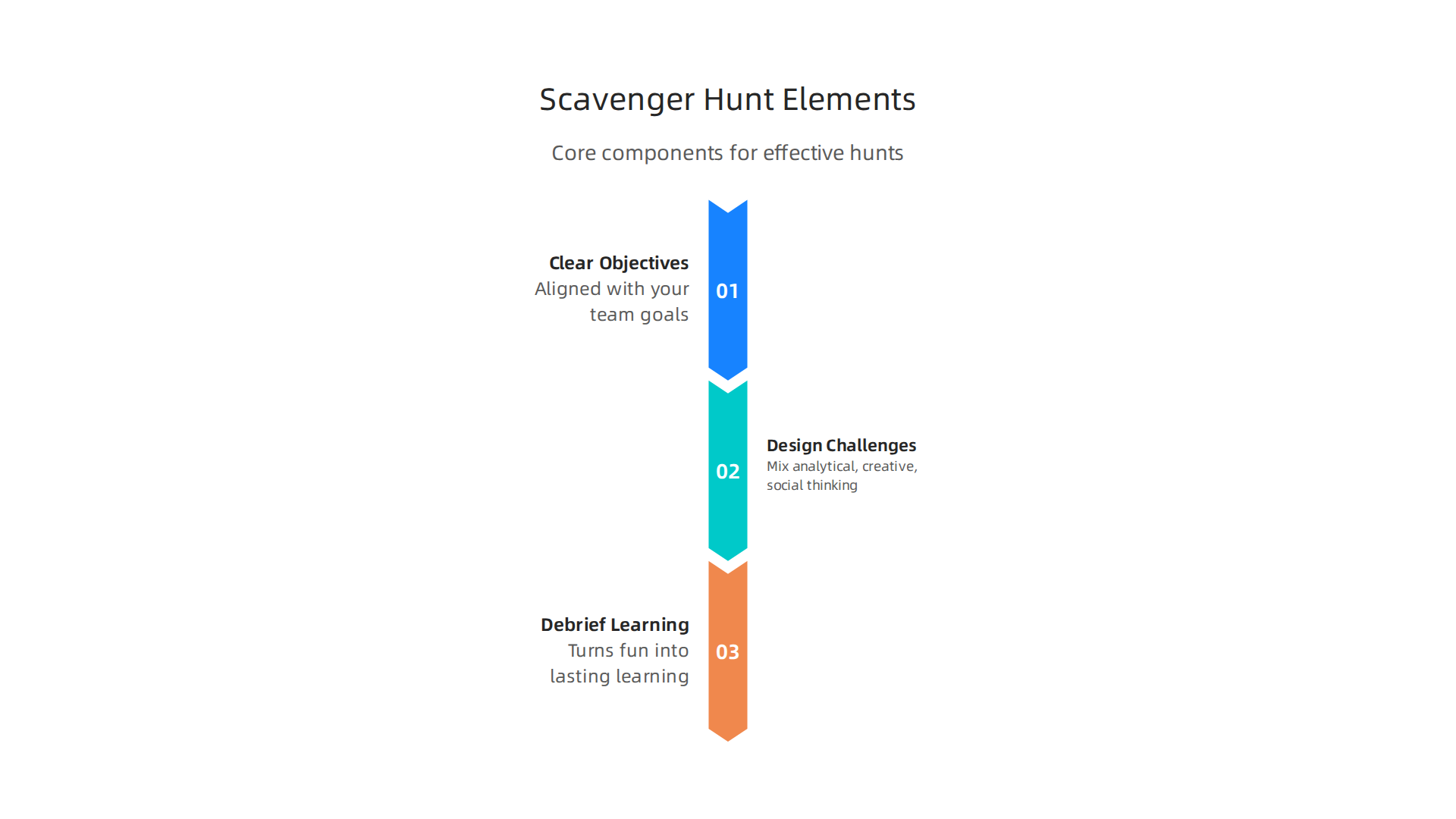
You cannot just throw together random clues and hope for the best. Here are the three elements that separate a forgettable game from a transformative experience.
Set Clear Objectives Aligned with Your Team Goals
Before you write a single clue, ask yourself: What do we want to achieve? Maybe you want to improve communication between departments. Or maybe you want to surface hidden leadership skills. According to the Scavenger Hunt Team-building Activity Ideas guide, starting with clear objectives that match your team goals turns the hunt into a focused development tool. Without that, it is just a game. With it, you get a targeted team building problem solving activity that strengthens the exact skills your team needs.
Design Challenges That Mix Analytical, Creative, and Social Thinking
A great hunt does not rely on only one type of puzzle. You want challenges that require logic, like a cipher or riddle. You also want tasks that demand creativity, like building something from random items. And you need social challenges, like interviewing a stranger or taking a group photo that captures your company values. The Anatomy of Scavenger Hunts for Team Building explains that mixing these types of problems keeps everyone engaged and taps into different strengths across the team. This variety also makes the hunt feel fresh and exciting, turning it into one of the best good team building games for developing well-rounded collaboration.
Debrief to Turn Fun into Lasting Learning
The game ends, but the learning should not stop there. A good debrief helps the team reflect on what they experienced. Ask questions like: What did you notice about how your team communicated? Who stepped up as a leader? What would you do differently? According to How to Make the Most of Your Next Team Building Scavenger Hunt, ending with a structured debrief turns the energy of the hunt into real insights that stick. This is the step most people skip, but it is the most important one.
After the debrief, keep the connection alive with a light moment. A funny shared story can spark conversation without feeling forced. If you are looking for a way to keep the good vibes going, this lighthearted idea might be just what your team needs.
Setting Clear Objectives
You already know that setting clear objectives is the first step. But here is the nuance. Your objectives should target a specific soft skill your team actually needs. Maybe it is active listening. Maybe it is delegation under pressure. Or maybe it is creative problem solving.
According to the Guide to Team Building Scavenger Hunts, a structured hunt forces participants to collaborate in small groups. That structure is your chance to target a weakness. If your team struggles with communication breakdowns, design clues that one person can read and another can only hear. If they struggle with trust, create a blindfolded challenge that depends on clear directions.
The science behind scavenger hunts shows that aligning the activity with a specific team pain point makes the outcome far more impactful.
Do not settle for a generic "improve teamwork" goal. Get specific. Focus on the team dynamics that are currently holding your group back and design your hunt to fix exactly that. This approach matches what Google Project Aristotle discovered about psychological safety and clear goals.
When you align the hunt with a real need, you turn a simple game into one of the best team building problem solving activities for developing targeted skills. Add a little friendly competition with a scoring system or a race against the clock, and you have a workplace competition idea that sharpens skills while energizing the team.
Once your objectives are clear, it is time to build the challenges. A great team building scavenger hunt mixes different types of tasks. According to the experts at 25 Creative Scavenger Hunt Challenges, you should blend logic puzzles, physical tasks, and open-ended creative challenges. This mix keeps everyone engaged. No one gets bored, and each person can contribute in their own way.
Another powerful trick is information asymmetry. Give each team member a different clue. They must share their pieces to solve the puzzle. The Anatomy of Scavenger Hunts explains that this forces real communication. It turns a simple hunt into one of the best team building problem solving activities.
For more ideas on effective team games, check out our collection of team building games that actually work. After the hunt, keep the connection going with a fun shared experience. Why not give your team a laugh with a clever comedy as a reward?
How to Design a Scavenger Hunt for Your Team
Designing a team building scavenger hunt doesn’t have to be complicated. In fact, you can pull one together in just a few steps. Here is a simple process that works every time.
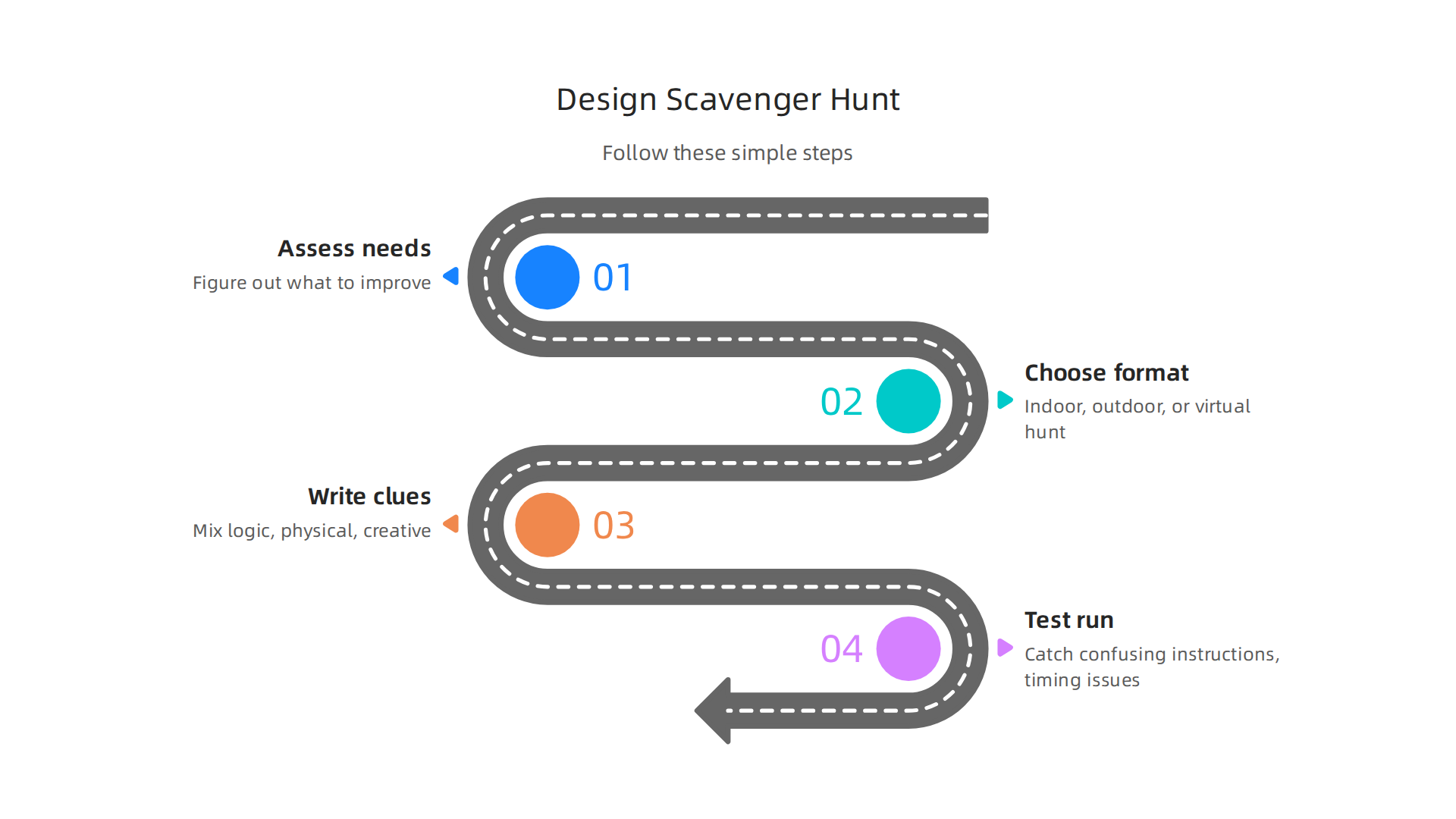
Step 1: Assess your team’s needs.
Start by figuring out what you want to improve. Do you need better communication? More trust? Just a fun break from work? According to the team building experts at Andamanda Phuket, you should always align your objectives with your team building goals first. This keeps the activity useful, not just entertaining.
Step 2: Choose your format.
Decide if you want an indoor, outdoor, or virtual hunt. Your format sets the tone. For example, an office scavenger hunt works well for a small team, while a park based puzzle dash works better for larger groups. The comprehensive guide from Alleykat Adventures recommends choosing a route and location that matches your team’s comfort level.
Step 3: Write your clues and challenges.
This is where the magic happens. Mix logic puzzles, physical tasks, and creative challenges. Use a theme that matters to your team. Maybe it is your industry, a shared inside joke, or even a pop culture reference. A good theme makes the hunt feel personal. For inspiration, check out these 25 creative scavenger hunt challenges that blend different task types.
Step 4: Do a test run.
Always try your hunt before the big day. Ask a small group to walk through the clues. You will catch confusing instructions or timing issues. The science behind scavenger hunts from cityHUNT shows that a smooth experience keeps energy high and frustration low.
Time management and pacing.
This is critical. A good team building scavenger hunt should last between 45 and 90 minutes. Break the hunt into rounds or give each team a time limit for each challenge. The Strayboots guide suggests ending with a bang: a final challenge that brings everyone together for a big reveal.
If you want even more tested ideas for good team building games, take a look at our full list of team building games that actually work. And after your hunt, keep the connection alive. Need a lighter team idea? A funny shared story can spark conversation without feeling forced. Check out Dori Diculous for a laugh.
Types of Scavenger Hunts for Different Team Goals
Now that you know how to design a hunt, let’s look at the different types you can choose from.
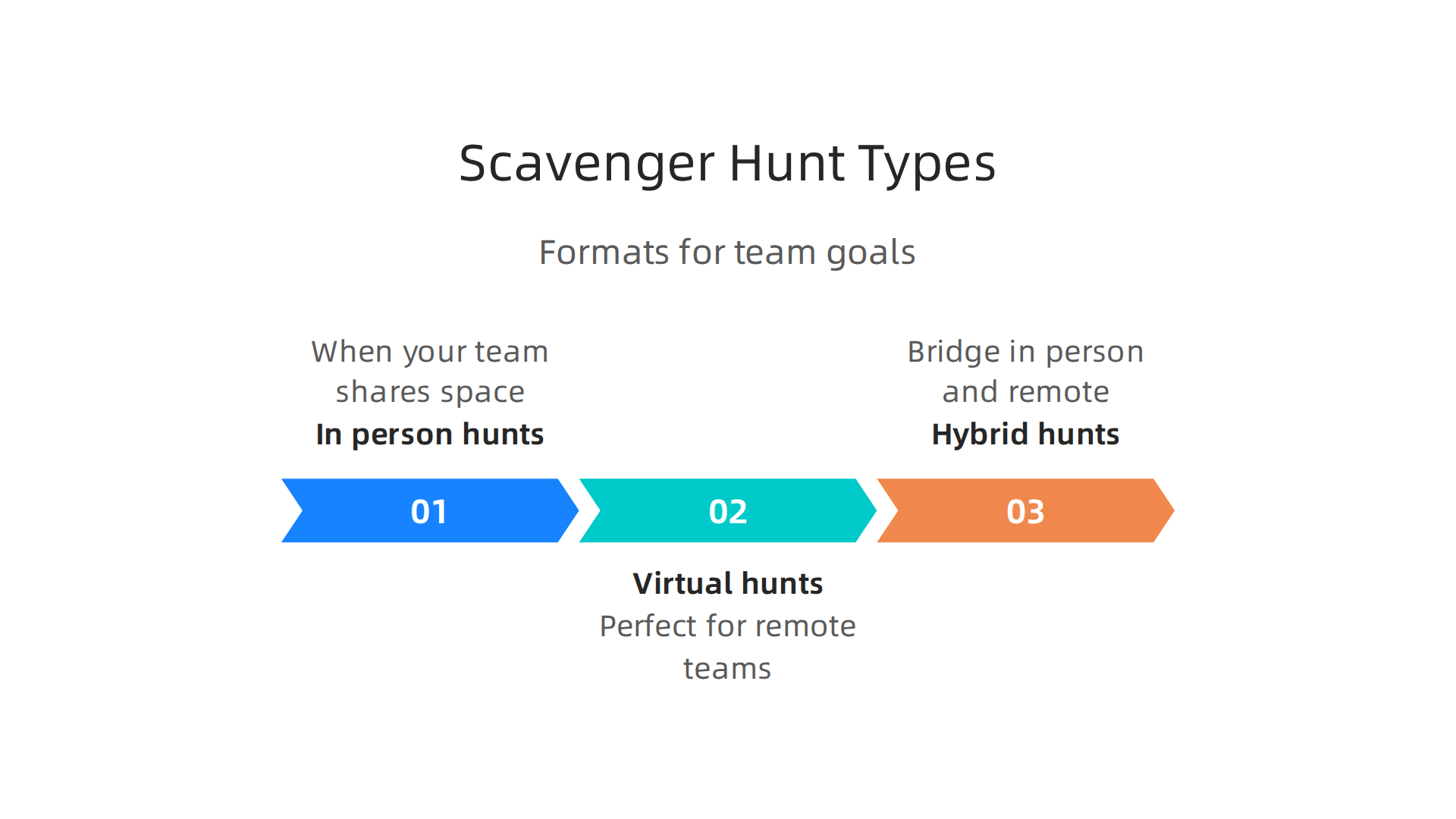
The right format depends on where your team works and what you want to achieve.
In person hunts work best when your team shares the same space. These allow for physical challenges, real world clues, and face to face interaction. For example, an office based hunt can include tasks like finding a hidden object or solving a puzzle together. According to a guide from Infinity Park, in person hunts boost collaboration and communication in a natural setting. They are great for workplace competition ideas that get people moving.
Virtual hunts are perfect for remote teams. These use digital tools like video calls and scavenger hunt apps. You can include escape room elements, photo challenges, or trivia rounds. As Locatify explains, virtual treasures allow teams to connect across distances. These are excellent team building problem solving activities for distributed groups.
Hybrid hunts bridge the gap between in person and remote. They use shared virtual spaces and location based tasks. As noted in the SessionLab method, you can form mixed groups of on site and remote participants. This format works well when some team members are in the office and others are at home.
These are all good examples of good team building games for different settings. For more ideas on connecting your team, check out our guide on icebreaker questions that build high performing teams.
After your hunt, keep the fun going with a shared story. Check out this clever sci fi comedy for a light team read that sparks conversation without feeling forced.
In-Person Hunts
If your whole team shares the same building or office, an in person hunt is your best bet. You get to move around, use physical objects, and laugh together in real time. That is hard to beat.
Start by picking a space you know well. Your office, a nearby park, or even a coworking space all work. Then design challenges that get people on their feet. Think of tasks like finding a hidden item, taking a group selfie in a funny pose, or solving a riddle taped to a conference room door.
Physical movement makes these hunts feel more alive. According to a list of team building scavenger hunt ideas, in person hunts boost collaboration and communication naturally because people are working face to face. They are also some of the best workplace competition ideas because teams can race to finish first without technical delays.
You can even use real world props. Everyday office supplies like sticky notes, paper clips, or whiteboard markers become tools for creative challenges. This makes the hunt feel fresh without costing much.
For more ways to get your group moving, check out our guide on free play team building activities that build trust and connection. It is packed with low cost ideas that work great alongside your in person scavenger hunt.
Virtual Hunts for Remote Teams
Remote teams face a real challenge. You rarely see each other in person. A virtual scavenger hunt fixes that.

You use video conferencing, shared documents, and online puzzle platforms to connect your people. The best part? Setting one up takes almost no time.
Start with a video call. Break your team into small groups and send them into breakout rooms. Then give them a list of digital tasks. For example, ask them to find a meme that matches a work inside joke, capture a screenshot of a funny Slack message, or solve a riddle using a shared Google Doc. These are good team building games that work across monitors.
Virtual hunts also handle time zones well. You can run some tasks asynchronously. People complete their challenges when they can. This makes a virtual hunt one of the best workplace competition ideas for distributed teams. If you want to dive deeper into platform selection, check out this guide on designing virtual treasure hunts for remote teams.
For more ideas that work in any setting, look at our list of team building games that actually work for in-person, virtual, and hybrid teams. And if you need a lighter idea to get your team laughing, try a funny shared story that sparks conversation without feeling forced.
Problem-Solving Scenarios to Include
A basic scavenger hunt is fun. But a great one makes people think. The best team building scavenger hunt challenges your group to solve real problems, not just find random objects. That is where the growth happens.
Start by hiding your company’s actual business puzzles inside the clues. For example, give your team a set of steps that represent a broken process flow. They have to arrange them in the right order to unlock the next clue. This turns a simple game into one of the most useful team building problem solving activities you can run. It also shows you who spots patterns fast and who listens well.
Next, add scenarios that force your people to step into someone else’s shoes. Ask a team to role play a frustrated customer who calls support with a tricky issue. Their task is to write a kind, clear response in under two minutes. This builds empathy and communication skills quickly. Studies show that activities requiring perspective taking strengthen trust across groups. You can find more examples of how these exercises boost collaboration in this guide on how scavenger hunts improve teamwork and creativity.
Finally, set a strict time limit on each challenge. When people feel pressure, they stop overthinking and start deciding. That is where real team dynamics show up. Need help understanding how your team behaves under pressure? Read this overview of team dynamics and how to improve them.
After a hunt that works your team’s brain, a little laughter goes a long way. For a lighter way to keep the vibe going, try sharing a funny story together. Give your team a laugh with this clever sci-fi comedy. It is a quick read that builds connection without any pressure.
Measuring the Impact of Your Scavenger Hunt
You spent time planning a great team building scavenger hunt. Your team laughed, solved puzzles, and worked together. But here is the real question: did it actually make a difference?
Many leaders skip this step. They assume the fun alone was worth it. But measuring the impact helps you prove the value of your effort. It also shows you what to change next time. A good scavenger hunt delivers measurable outcomes (Naboo). Let’s look at three ways to track that impact.
Start with simple surveys before and after the hunt. Ask your team to rate their communication, trust, and collaboration on a scale of one to ten. Do the same survey again a week after the hunt. Look for shifts in the scores. Even small changes matter. If people say they feel more comfortable sharing ideas, that is a win. Surveys also give you direct feedback on what worked and what felt awkward.
Track hard performance metrics during the hunt itself. How fast did each group finish the challenges? How many creative solutions did they come up with? These numbers tell you a lot about team dynamics under pressure. For example, if one team finished every puzzle in half the time, ask them what helped. If another team generated ten different ideas for a single problem, that shows strong brainstorming. Clear metrics such as reduced turnover, improved productivity, and higher employee engagement all point to positive return on investment (Dorians Challenge).
Look at the long-term picture. Did people start working together more smoothly in the weeks after the hunt? Did your team come up with more innovative solutions in their daily work? Employee retention and team innovation are big indicators that your team building scavenger hunt created real change. When people feel connected, they stay longer and think bigger.
Measuring impact does not have to be complicated. Even a few simple checks can tell you if your team building problem solving activities are actually building stronger teams. For more on how great teams work at a deeper level, check out this research on how team building really works according to Google Project Aristotle.
Common Mistakes and How to Avoid Them
You know how to measure impact now. That is great. But even the best planned team building scavenger hunt can go sideways. The difference between a hunt that builds real connection and one that creates awkward tension often comes down to a few avoidable mistakes. Here are the big ones and how to skip them.
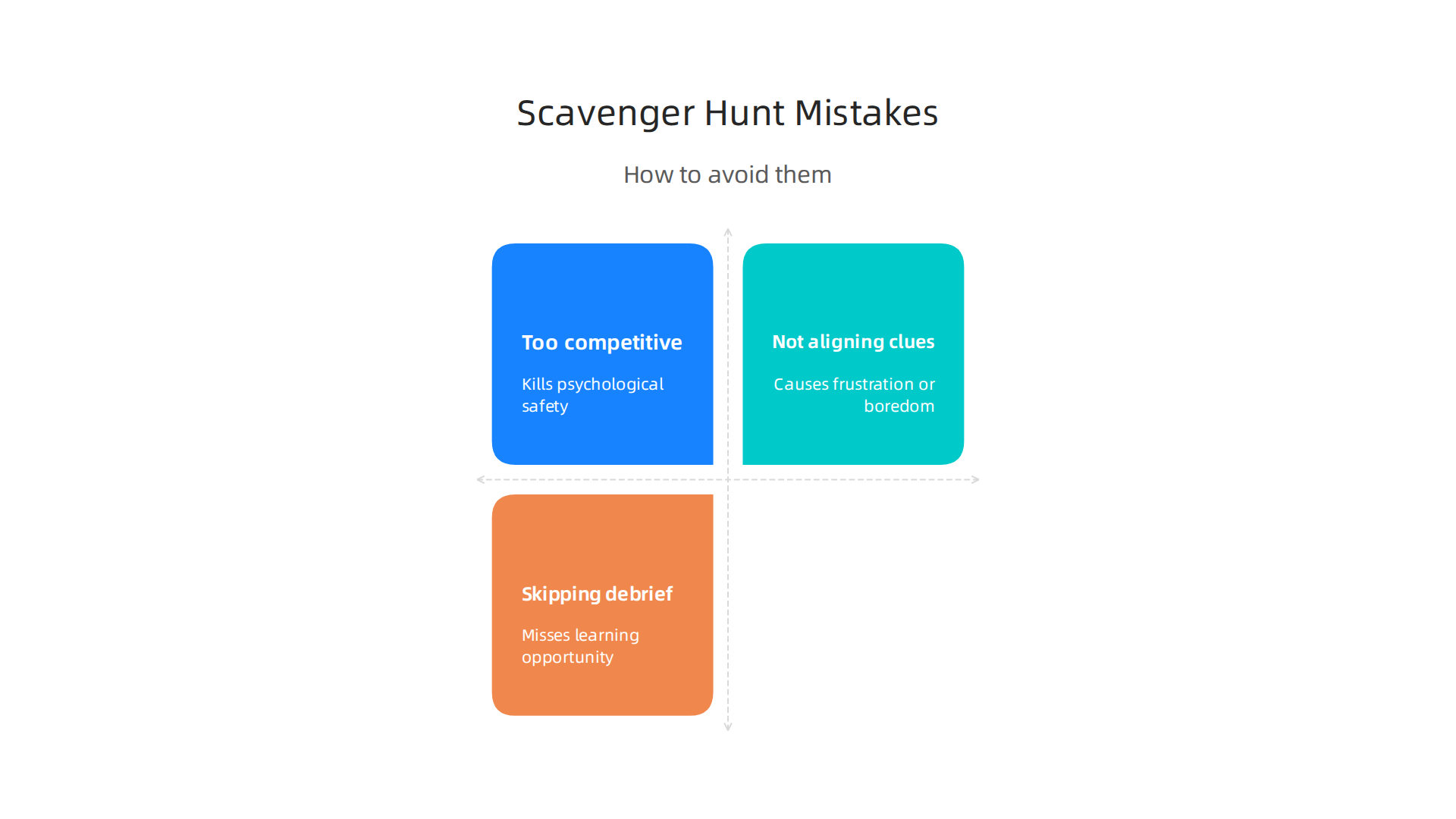
Mistake: Making the hunt too competitive.
A little friendly competition is fun. Too much of it kills psychological safety. When people feel they must win at all costs, they stop helping each other. They stop sharing ideas. Some people even shut down completely. That is the opposite of what you want.
The fix? Frame the hunt around collaboration, not winners and losers. Give bonus points for teams that help another team. Or focus on creative solutions instead of speed. Remember, good team building games leave everyone feeling included, not defeated. As research shows, a focus on behavioral changes and team feedback is what really matters (Naboo).
Mistake: Not aligning clues with team size or skills.
You throw a complex puzzle at a small team and they get frustrated. You give a simple riddle to a group of sharp problem solvers and they get bored. Either way, you lose engagement.
The fix? Know your team first. Match the difficulty of each challenge to the size and skill level of the group. If you have a mix of experience levels, create roles within each team. One person handles the physical clues, another handles the logic puzzles. That way everyone contributes. You can find easy step-by-step plans that show how to do this (TeamBuilding ROI).
Mistake: Skipping the debrief.
Your team just finished a great scavenger hunt. Everyone is laughing. You feel good about the day. So you let people leave without talking about what happened. Big mistake.
The fix? Always hold a short debrief right after the hunt. Ask two simple questions: What worked well? What would you do differently next time?
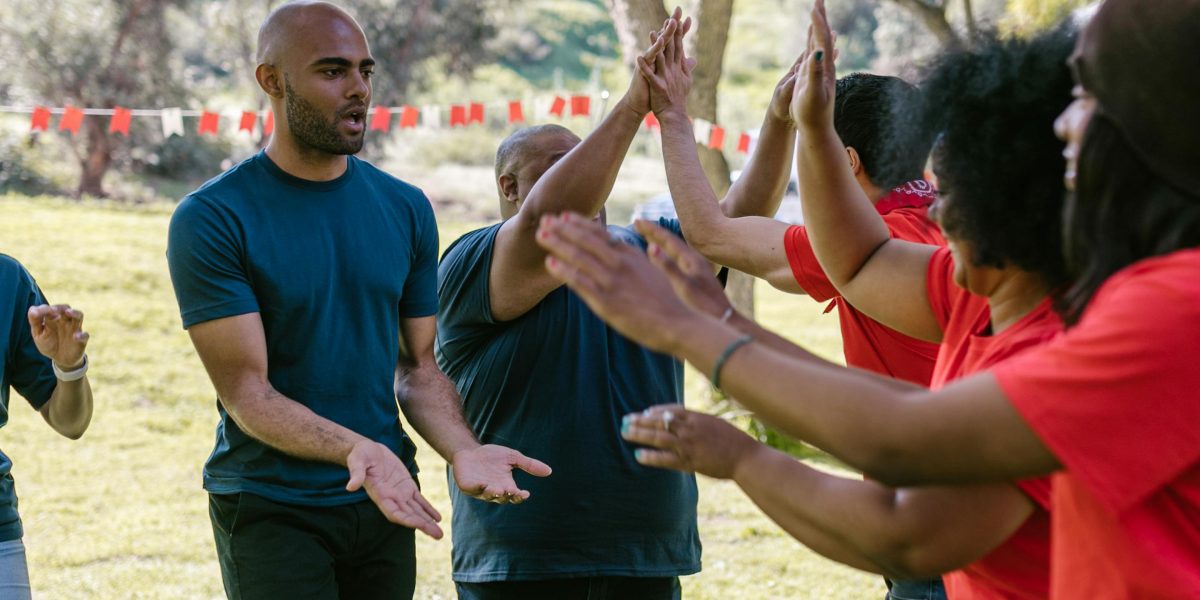
This turns a fun activity into a real learning moment. It also gives you direct feedback for measuring ROI, since reduced turnover and higher engagement are signs your event worked (Dorians Challenge). A quick five minute conversation can double the value of your whole event.
Watch out for these common mistakes and you will turn a good team building scavenger hunt into a great one. If you want to dive deeper into why team dynamics matter, this piece on how team building really works according to Google Project Aristotle is a good next read.
Summary
This guide explains how to design a team building scavenger hunt that moves beyond surface-level fun to deliver measurable development for your group. It covers why scavenger hunts work—by forcing role-splitting, cross‑department interaction, and gamified engagement—and shows the three core elements of success: clear objectives, mixed challenge types, and a focused debrief. You’ll get a simple step-by-step design process (assess needs, pick a format, write clues, test run), options for in‑person, virtual, and hybrid setups, plus problem‑solving scenarios that target real workplace skills. The article also outlines how to time and pace your event, measure short‑ and long‑term impact with surveys and metrics, and avoid common pitfalls like over‑competition or skipping the debrief. After reading, you’ll be able to plan, run, and evaluate a scavenger hunt that strengthens communication, trust, and collaboration in your team.