How to Diagnose and Reshape Team Roles and Dynamics

Introduction: Why Team Roles and Dynamics Matter More Than Ever
You know that feeling when a team just clicks? Ideas flow. People listen. Work gets done fast.
Now think about the opposite. You probably know that feeling too. Someone talks too much. Someone else stays silent. Tasks fall through the cracks. Frustration builds.
Here is the thing. This second scenario is way too common in 2026. According to Gallup’s latest research, only 20% of employees worldwide feel engaged at work.

That costs the global economy a staggering $10 trillion in lost productivity each year. Poor communication plays a big part in that. In fact, the cost of bad workplace communication now ranges from $9,284 to over $30,000 per employee annually.
So what is going wrong?
Most teams struggle because their roles and group dynamics are out of balance. Without awareness of who does what best, smart people end up in the wrong seats. Group thinking takes over. New ideas get squashed. The result? Disengagement spreads like a slow leak.
But here is the good news. You can fix this. A team shuffler is a simple but powerful tool that helps you diagnose these hidden imbalances and rebalance roles so collaboration improves naturally. It works whether you are in a meeting room or working remotely with teammates you barely see.
When you get the right people in the right roles, teamwork makes the dream work becomes more than a cute saying. It becomes your daily reality. Even small changes like forming better groups of four for a project can shift how your whole team communicates.
Think of it like this. You do not need fancy consultants or expensive retreats. Group team building activities that are intentional and structured can make a huge difference. And a team shuffler gives you the blueprint to run them well.
Ready to see how this works in practice? Let us start with the basics of team roles and build from there. If you want to jump ahead, check out some practical group team building activities you can use right now to test these ideas.
Understanding Team Roles: The Foundation of Effective Dynamics
So if you want to fix those broken team dynamics we talked about earlier, you need a starting point. That starting point is understanding team roles.
Back in the 1970s, Dr. Meredith Belbin ran a famous study at Henley Business School. He noticed something simple but powerful. Teams with the right mix of people performed way better than teams full of superstars. This led to Belbin’s team role theory, which identifies nine distinct roles that every successful team needs.
According to Belbin, a team role is "a tendency to behave, contribute and interrelate with others in a particular way." The Institute for Manufacturing explains that these roles fall into three groups: action-oriented, thought-oriented, and people-oriented roles.
Here is a quick rundown of the nine roles:
| Category | Roles | What They Do Best |
|---|---|---|
| Action | Shaper, Implementer, Completer Finisher | Drive progress, turn ideas into reality, and make sure nothing falls through the cracks |
| Thought | Plant, Monitor Evaluator, Specialist | Generate new ideas, analyze options, and bring deep expertise |
| People | Coordinator, Teamworker, Resource Investigator | Build connections, resolve conflicts, and keep the team united |
Now here is why this matters for you. When team members understand their natural roles, role clarity reduces conflict and increases psychological safety. A 2021 study in The Open Psychology Journal confirmed that Belbin’s theory is scientifically tested and highly relevant for real teams.
Think about what happens without this clarity. You get group thinking where everyone agrees too fast. You get frustration when someone wants to challenge ideas but everyone else just wants harmony. And you get those painful moments where tasks slip because nobody took ownership.
Common imbalances look like this:
- Too many Shapers: Lots of pushing and arguing. Little finishing.
- Not enough Completers: Great ideas but messy execution.
- Too many Teamworkers: Everyone gets along but nobody makes hard decisions.
- Not enough Plants: The team recycles old ideas instead of innovating.
A 2024 study in the Journal of Personality explored how personality traits connect to team role behavior, showing these patterns are real and measurable.
So what do you do about it? You use a team shuffler approach. You assess who is on your team, identify gaps and overlaps, and then adjust roles to create balance. It does not mean firing anyone. It means shifting responsibilities so each person plays to their strengths.
This is where group team building activities come in handy. Simple exercises can reveal who naturally takes charge, who finds the gaps, and who keeps the mood light. For example, you can run activities in smaller groups of four to test different role combinations without pressure.
When you get this right, teamwork makes the dream work stops being a cliché. It becomes a real outcome of intentional design.
Want to see what balanced roles look like in action? Explore Activities that help you spot and strengthen each role on your team.
The Science of Group Formation: Tuckman’s Model and Beyond
Understanding team roles gives you a powerful lens, but it is only half the picture. Teams don’t stay static. They grow, fight, settle, and eventually hit their stride. That is where Tuckman’s model of group development comes in.
Back in 1965, psychologist Bruce Tuckman published a simple but brilliant idea. Every team moves through four predictable stages: Forming, Storming, Norming, and Performing. Later, he added a fifth stage: Adjourning.
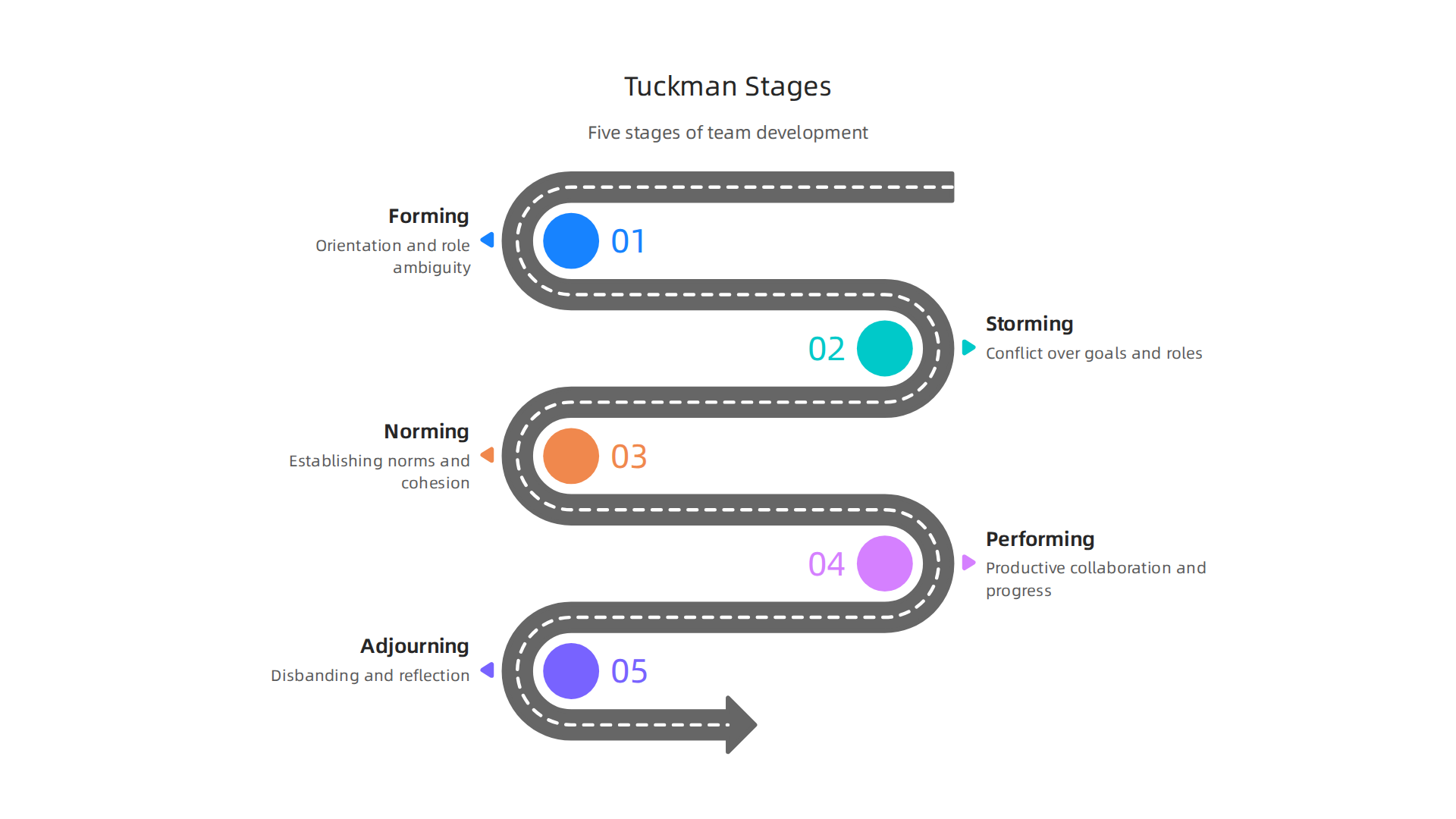
This model remains the gold standard for understanding how groups evolve. When you know what stage your team is in, you can apply the right interventions instead of guessing.
Here is what each stage looks like in real life:
-
Forming. Everyone is polite and cautious. People are figuring out who does what. There is low trust but high curiosity. This is a great time to start with simple icebreakers or a short teamwork ritual. For example, you can build stronger teams with a minute with Maxwell teamwork ritual to set a positive tone from day one.
-
Storming. This is the messy middle. Disagreements pop up. People challenge each other and the leader. Conflict is normal and even healthy. If your team is stuck here, group thinking might be the problem. Too much harmony during storming can delay real progress. Use groups of four for tough discussions so quieter voices get heard.
-
Norming. The team starts to gel. Members agree on rules, roles, and ways of working. Trust builds. This is where the team shuffler approach shines. You can reassign responsibilities based on what the team now knows about each other’s strengths. A 2024 study published in Frontiers in Psychology explored how personality connects to team role behavior, confirming that people perform better when roles fit their natural tendencies.
-
Performing. The team runs like a well oiled machine. People anticipate each other’s needs. Results flow. To keep this stage alive, mix in fun group team building activities that reinforce connection without taking away from work.
-
Adjourning. The project ends or people move on. It is important to celebrate and reflect. This stage matters for long term morale.
Modern teams also face hybrid and remote challenges. Tuckman’s stages still apply, but they look different. A remote team might storm through Slack messages instead of face to face. Leaders need to recognize those signals early. According to the Belbin Team Role Company, ongoing research supports using structured tools to help teams through these transitions.
So how do you know which stage your team is in? Watch for clues. Are people still saying "nice to meet you"? That is forming. Are there heated debates in every meeting? That is storming. Is there a shared sense of "we got this"? That is norming or performing.
Once you know the stage, pick the right activity. A quick game can help a forming team relax. A structured problem solving exercise can guide a storming team toward solutions. And a celebration can honor an adjourning team’s work.
When teamwork makes the dream work becomes real, it is usually because someone paid attention to these stages. You don’t need to be a psychologist. You just need to observe and adjust.
Ready to find the perfect activity for your team’s current stage? Explore Activities that match each phase of Tuckman’s model and keep your team moving forward.
How a Team Shuffler Can Diagnose and Reshape Roles
Have you ever been part of a team where one person is doing all the talking while another quietly holds the best ideas? Or where everyone is stuck in the same roles even though they have outgrown them? That is where a team shuffler can help.
A team shuffler is a structured exercise. It can be a card sort, a role swap, or a quick rotation of responsibilities. The goal is to reveal hidden preferences. People often do not know what they are good at until they try something different. A team shuffler gives them that chance in a safe, low pressure way.
Here is how it works in practice. You give everyone a set of cards or prompts that describe different tasks or behaviors. Each person picks the ones that feel most natural. Then you compare results. You might discover that your quiet analyst actually loves leading brainstorming sessions. Or that your loudest talker prefers behind the scenes organization. These surprises are gold.
Once you see the real preferences, you can rebalance roles. Create new sub teams. Rotate responsibilities. This is especially useful when a team is stuck in the storming phase of Tuckman’s model. A team shuffler can break the tension by giving everyone a fresh start.
In 2026, many teams are using tools to better understand their own dynamics. Just like AI recruiting tools help companies find the right talent with precision, a team shuffler helps you find the right role for each person on your team. Using the right approach gives you a compass to navigate the talent maze, as noted in recent recruitment best practices.
A team shuffler also fights group thinking. When people stay in the same roles too long, they stop questioning old habits. By shuffling, you force fresh perspectives. This works great with groups of four because small teams make it easy to try new combinations without overwhelming anyone.
Want to see how a team shuffler plays out in real life? Try a simple role swap for one meeting. Have the note taker lead the discussion. Have the presenter listen and take notes. See what happens. You might be surprised at the energy it creates.
For teams that need more structure, look into group team building activities that include role rotation. Many of these exercises are designed to reveal hidden strengths while keeping things fun. When done right, a team shuffler can transform a stagnant group into one where teamwork makes the dream work feels real again.
To help you get started, check out these little games for team building that build real connection. They are simple to run and perfect for trying out a team shuffler approach.
If you are ready to find the exact activity for your team’s current needs, Explore Activities that fit your group size and goals. A small change in roles can lead to big shifts in how your team works together.
Overcoming Common Team Dynamics Pitfalls
You know the feeling. You send out a clear message, but somehow half the team misses it. Or maybe the energy in the room just feels flat. People show up, do their work, and leave. No real connection. No spark.
These are the classic team dynamics pitfalls. And they are more common than you think.
The Big Three Challenges
In 2026, teams face three major problems that keep them from working well together.
Poor communication is the first one. Studies show that between 61% and 76% of employees still miss critical updates, even when companies communicate regularly. That is a huge gap. And it costs money. Research from 2026 estimates the cost of poor communication at anywhere from $9,284 to over $30,000 per employee. That is a lot of lost time and missed opportunities.
Low morale is the second pitfall. Gallup’s 2026 report found that only 20% of employees worldwide were engaged in 2025. Twenty percent. That means 8 out of 10 people are not fully invested in their work. And that is costing the global economy $10 trillion in lost productivity. When morale is low, everything slows down.
Remote disconnect is the third challenge. With more teams working hybrid or fully remote, it is hard to build real bonds. People feel isolated. They miss the casual conversations that build trust. And that disconnect can make teamwork feel forced.
What Causes These Problems?
The root causes are usually two things. Role ambiguity means people are not sure what they should be doing. They overlap with others or miss responsibilities entirely. And lack of trust means team members do not feel safe sharing ideas or asking for help.
According to recent research, manager conduct alone accounts for 70% of the variance in employee engagement rates. That is a massive influence. When managers do not communicate clearly or build trust, the whole team suffers. Many managers also struggle to relay information effectively, which makes role ambiguity worse.
How a Team Shuffler Fixes These Issues
This is where a team shuffler comes in. It directly tackles all three pitfalls.
For poor communication, a team shuffler forces people to talk in new ways. When you swap roles, you have to explain your perspective. You have to listen differently. That breaks old communication habits.
For low morale, a team shuffler brings fresh energy. People get to try things they actually enjoy. They feel seen and valued. When you let someone shine in a new role, their engagement goes up naturally.
For remote disconnect, a team shuffler creates shared experiences. Even if your team is spread across time zones, a simple role rotation can spark conversation. It gives remote workers a reason to interact beyond project updates.
The best part? You do not need a huge budget or a fancy program. You just need a willingness to try something different. Start with a simple activity like a role swap in your next meeting. Let the quiet person lead. Let the loud person listen. See what shifts.
These targeted group team building activities are designed to address the real reasons teams get stuck. They do not just scratch the surface. They get to the root of the problem.
When you use a team shuffler the right way, you move past the hype of teamwork makes the dream work and into actual, practical change. You fix communication. You raise morale. You reconnect remote teammates. And you do it without forcing people into awkward trust falls.
Taking the Next Step
The data is clear. Poor communication, low morale, and remote disconnect are not going away on their own. But you do not have to fix everything at once.
Start with one small activity. Use a team shuffler to break one bad pattern. Then build from there.
If you want to try a structured approach that addresses all three challenges at once, Explore Activities designed for groups of four to six people. These are low prep, high impact, and perfect for 2026 teams.
Practical Team‑Building Activities Aligned with Role Theory
Knowing the pitfalls is only half the battle. You also need the right tools to fix them. But here is the thing. Not all activities are equal. Some are random games that feel forced. Others actually align with how people naturally work and grow on a team.
That is where role theory comes in. The idea is simple. Every person on your team has a preferred way of contributing. Some are planners. Some are doers. Some are the ones who keep the group thinking on track. When you match activities to these natural roles, the results are much stronger.
You also need to think about where your team is right now. The Tuckman model says teams go through stages. Forming, storming, norming, and performing. An activity that works for a brand new team might flop with a seasoned one. So pick activities that fit your team’s current stage.
Three Activities That Work with Role Theory
Role‑swap days. Pick one day where people trade responsibilities. The quiet analyst leads the stand‑up. The loud salesperson takes notes. This is a powerful team shuffler move. It forces everyone to see the work from a different angle. And it breaks the usual patterns of group thinking because people bring fresh eyes to old problems.
Project post‑mortem rotations. After a project ends, do not let the same person run the review. Rotate who facilitates. Let a junior team member lead the conversation. This gives everyone a chance to practice leadership without pressure. It also uncovers insights that the usual leader might miss.
Team shuffler cards. Create a simple deck of cards with role swaps written on them. Each card says something like "Lead the meeting" or "Take notes for someone else." Pull one card per meeting. This is a low‑stakes way to keep things fresh. It works great for groups of four or five people who meet regularly.
Budget‑Friendly Options for Small Teams
You do not need a big budget for any of this. According to a 2026 guide on affordable activities, there are plenty of low‑cost options that still deliver strong results. A simple set of index cards, a shared document, or even a group chat can become your team shuffler tool.
For small teams and startups, these group team building activities are perfect. They cost almost nothing. They take little prep. And they address the real problems like poor communication and low morale without needing a fancy program.
How to Pick the Right Activity
Start by asking two questions.
- What stage is my team in right now?
- What roles are missing or underused?
If your team is still forming, pick activities that help people learn each other’s strengths. If your team is in the storming phase, go with role‑swap days to build empathy. If everyone is stuck in a rut, use the team shuffler cards to shake things up.
The best part is that you can layer these activities over time. You do not have to do everything at once. Start with one small swap and see how it feels.
Take Action Today
You already know the problems. Now you have the practical fixes. Try a role‑swap day this week. Or pull a team shuffler card at your next meeting. You will see how small changes in roles lead to big shifts in energy.
If you want more ideas that are ready to go, check out these little games for team building that are designed for real connection. They are low prep and high impact, just like the activities above.
Explore Activities to find more tools that fit your team’s unique stage and needs.
Measuring the Impact of Improved Team Roles and Dynamics
You have started using some of the activities from the last section. Maybe you did a role swap day. Or you pulled a team shuffler card at a meeting. That is great. But how do you know if any of it is actually working? You need to measure the impact. Otherwise you are just guessing.
Here is the thing. Measuring does not have to be scary or complicated. In 2026, the best teams track a few simple numbers to see if their dynamics are improving.

According to the Deloitte 2026 Global Human Capital Trends report, staying ahead as a leader depends on choices that enable speed and adaptability. Part of that is knowing what works for your team and what does not.
Key Metrics to Watch
Start with these four numbers. They are easy to track and they tell you a lot.
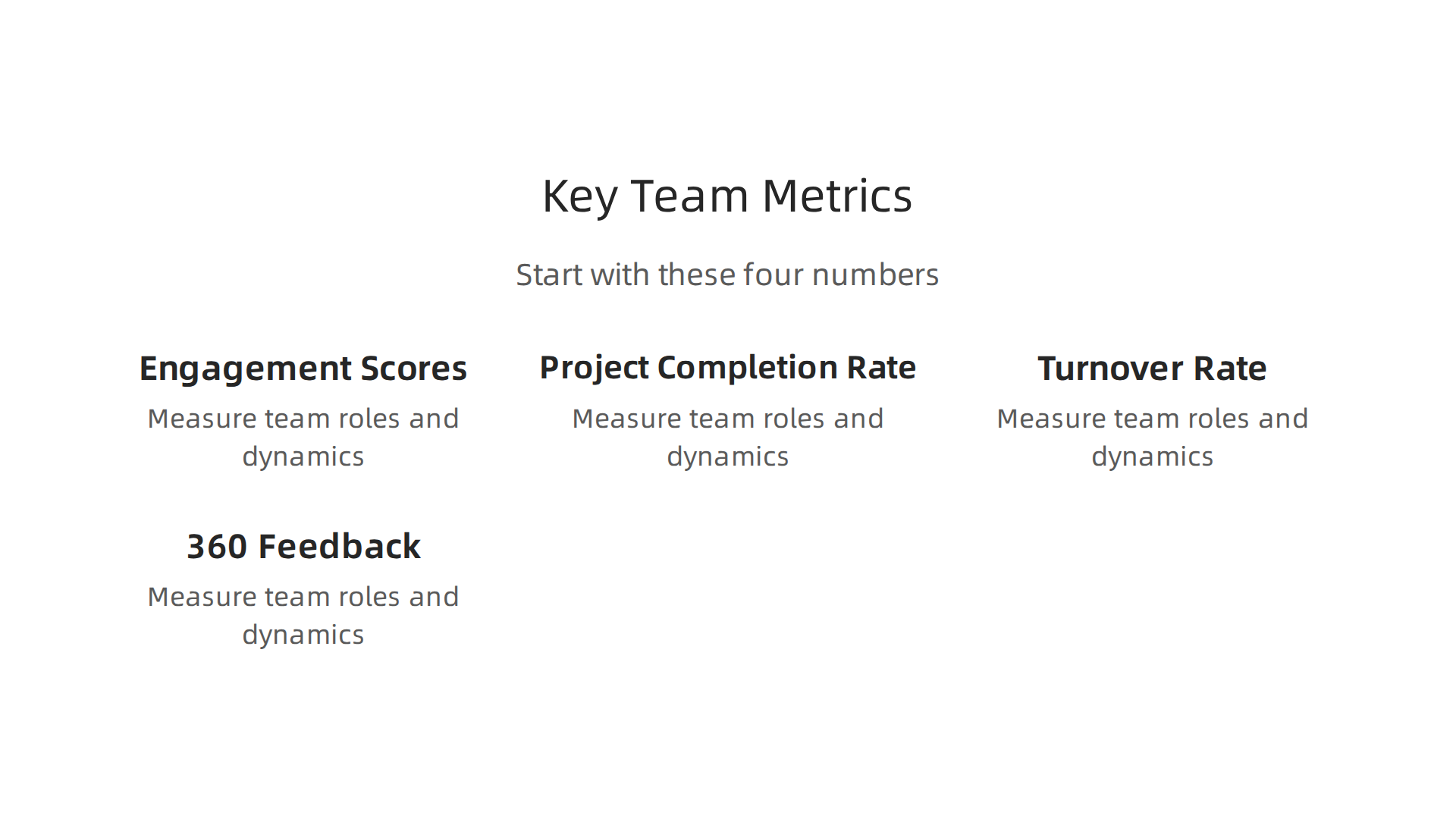
Engagement scores. This is a big one. Engagement is not just a buzzword. It is a real sign of how people feel about their work and their team. Track things like participation in optional meetings or how often people speak up. Team engagement metrics like retention rates and Employee Net Promoter Score are strong indicators of a healthy team, as noted in a recent guide on leadership effectiveness.
Project completion rate. Are your projects finishing on time? Do they meet quality standards? When team roles improve, communication gets better. That means fewer delays and less rework. Measuring team member performance helps you identify strengths and weaknesses, which supports a culture of accountability. Keep an eye on your completion rate over several months. Look for a steady upward trend.
Turnover rate. High turnover is expensive and painful. If people keep leaving, something is wrong. After you make role changes, watch if people stay longer. A drop in turnover is one of the clearest signs that your team dynamics have improved.
360 feedback. This is feedback from everyone around a person. Peers, managers, and direct reports all weigh in. It gives you a full picture, not just one person’s opinion. A simple pre and post intervention survey can show real change. The 2026 Performance Management Report from the Talent Strategy Group highlights how companies are using goal setting and coaching reviews to see progress over time. Use a validated survey tool to make your data reliable.
Connecting to Business Outcomes
These numbers do not just tell you if your team feels better. They are linked to real business results. Higher engagement often leads to better project completion rates. Lower turnover saves money on hiring and training. And when people communicate well, they solve problems faster. That drives innovation and can even boost revenue.
In other words, better team dynamics do not just feel good. They pay off.
Take the Next Step
You do not need a huge system to start measuring. Choose one metric. Write it down. Check it again in three months. You will see the difference.
If you want more practical activities to test with your team before you start measuring, check out these 10 low prep group games for adults that are designed for real connection.
Ready to start measuring and improving your team dynamics today? Explore Activities to find more tools that fit your team’s unique stage and needs.
Summary
This article explains how mismatched roles and poor group dynamics hurt engagement and productivity, and it shows practical ways to fix them using a simple