Free Play Team Building Activities That Build Trust and Connection

Introduction
Does your team feel stuck? Maybe the conversations stay surface level. Maybe people just go through the motions. You are not alone. Many teams struggle with communication gaps, low morale, and a lack of genuine connection. The usual fixes like mandatory happy hours or stiff trust falls rarely help.
But here is the thing. There is a simpler, cheaper, and more fun way to build real bonds. It is called free play.
Free play is unstructured, voluntary activity that you do just because it feels good. No scores. No winners. No pressure. And research shows it does a lot more than just kill time. Studies suggest that unstructured play supports learning, self-regulation, and even brain health. One study from Harvard Medical School explains how free play shapes the brain and brings benefits that last a lifetime. Another study on playful brains points to social playfulness as a way to support cognitive function in a joyful way.
For teams, free play can break down walls. It helps people laugh together, think on their feet, and build trust without even trying.

Whether you try random games during a lunch break or fun team activities in a meeting, the results are real.
This article brings together research, real-world experience, and practical ideas to help you use free play at work. We will cover simple team building games that actually work for in-person, virtual, and hybrid teams.
Ready to give it a shot? Explore Activities to find the best free play ideas for your team.
What Is Free Play? Defining the Concept in a Work Context
Think about the last time you did something just for the fun of it. No score to keep. No goal to hit. No one telling you what to do. That is free play. And when you bring that same spirit into the workplace, something shifts.
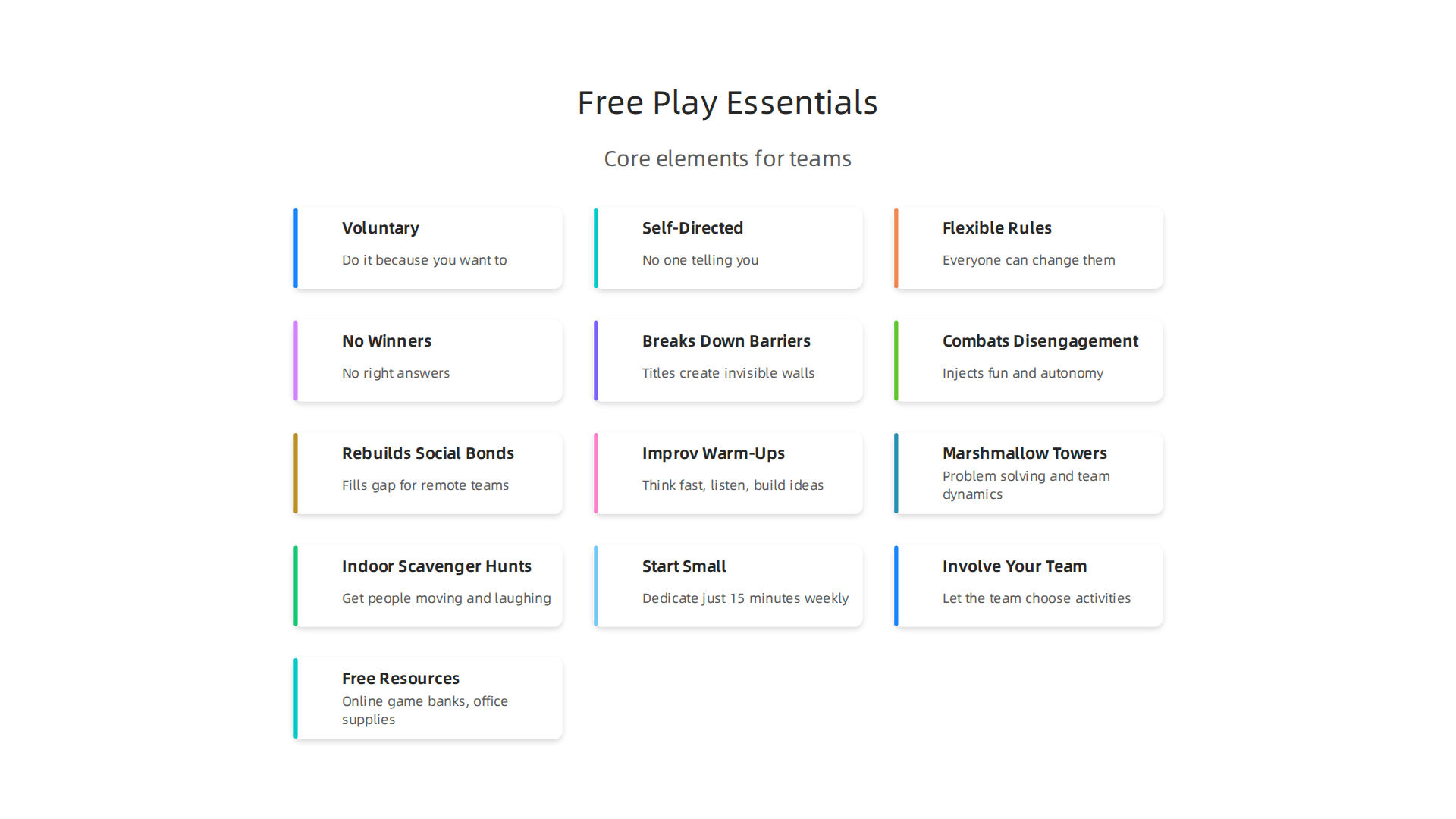
Free play is completely voluntary and self directed. You do it because you want to, not because you have to. The rules are flexible, and everyone can change them as they go.
That is the opposite of a rigid icebreaker where you must share your favorite pizza topping.
In a work setting, free play can look like a quick improv game during a meeting, a spontaneous building challenge with office supplies, or a 10 minute creative break where you doodle or pass a story around.

There are no winners. No right answers. Just shared laughter and real connection.
Why does that matter? Research shows that unstructured play helps develop emotional regulation, social skills, and even brain health. According to a Harvard Medical School article, free play shapes the brain and brings benefits that last a lifetime. Another study on playful brains explains how social playfulness can boost cognitive function in a fun way.
The key is letting go of control. When you stop trying to force bonding, it happens naturally. That is the magic.
If you are ready to explore simple ways to add free play to your team’s routine, check out our team building games that actually work for in person, virtual, and hybrid teams.
The Science Behind Free Play: Why It Works for Teams
You already know what free play looks like in a work setting. But have you ever wondered why it actually works? The answer is hiding inside your brain. And once you understand the science, you will see why free play is not just fun. It is a powerful tool for building stronger teams.
When you engage in free play, your brain lights up in specific ways. The prefrontal cortex gets involved, which helps with creativity and decision making. Mirror neurons fire, helping you connect with others and understand their emotions. This is why random games and fun team activities can spark real empathy and collaboration. A 2025 study on playful brains from Frontiers in Human Neuroscience shows that social playfulness supports cognitive function in a joyful way. Another research summary on the power of play points out that play affects multiple areas of the brain and helps with emotional regulation.
At the same time, free play lowers stress. Cortisol levels drop. Oxytocin, the bonding chemical, goes up. That shift builds psychological safety and trust within the group. When your team feels safe, they take more creative risks and share ideas more openly. This is exactly what makes team building ideas stick instead of feeling forced.
Studies show that adults who bring play into their work experience real benefits. They report higher innovation and better problem solving. According to the American Psychological Association, understanding the science behind creativity can help you train your brain for more innovative thinking. And a 2025 international study found that creative experiences can even delay brain aging.
So the next time someone says free play is just goofing off, you can tell them: it is actually brain training that builds trust and sparks ideas.
If you want to start applying this science with your team, try a low pressure shared experience that sparks laughter. A funny book like Ridiculous gives teams something strange and fun to discuss without any rules or goals.

That is free play in action. And if you need more structured options, check out these 10 low-prep group games for adults that build real team connection.
Overcoming Common Team Challenges with Free Play
You now know the science. But what does free play look like when your team faces real problems? Maybe your team feels stiff. Maybe people stay quiet in meetings. Or maybe remote workers seem disconnected. Free play can fix these issues.
Here is how.
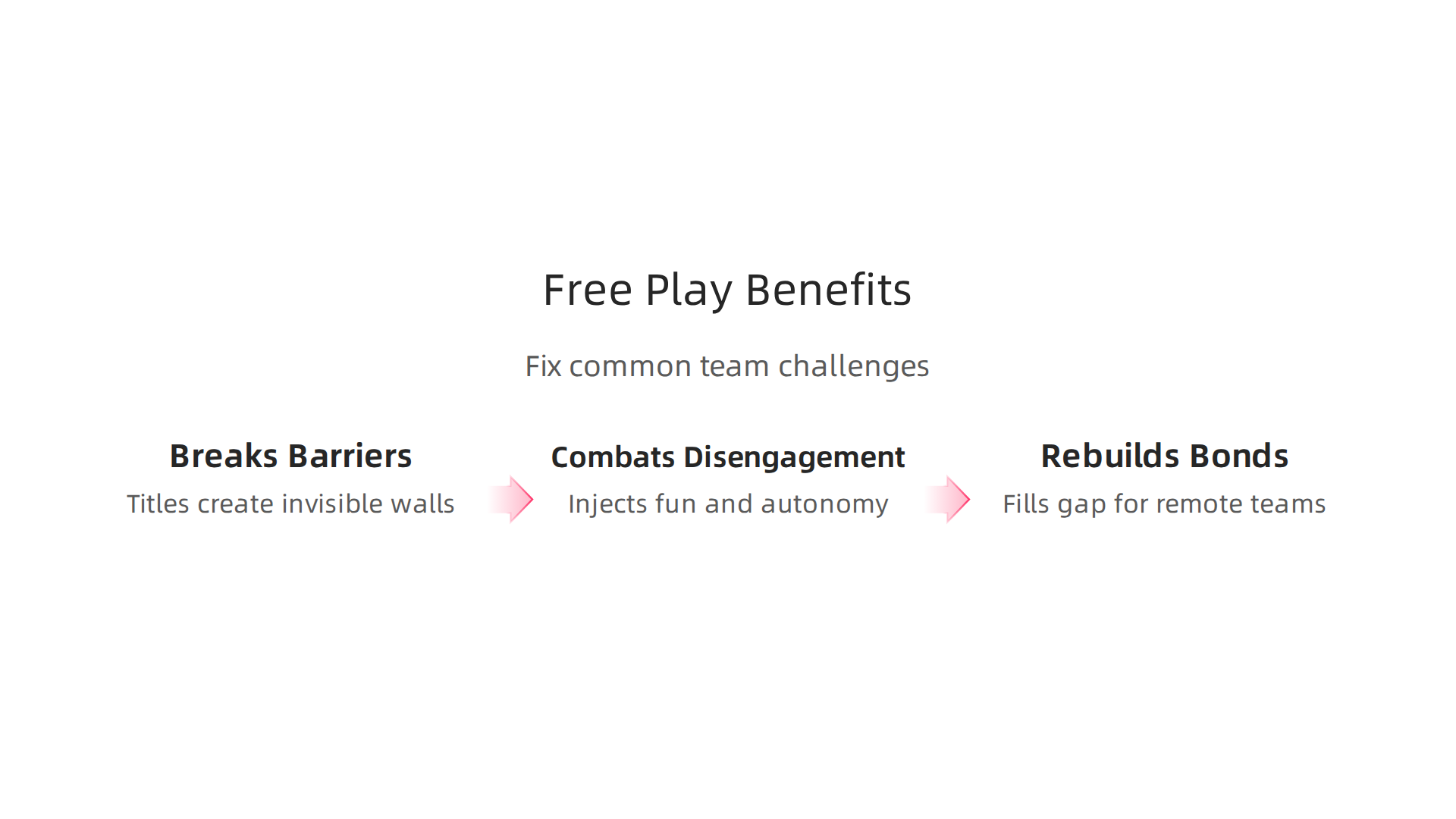
Free Play Breaks Down Hierarchical Barriers
Ever notice how people act differently around the boss? Titles create invisible walls. Free play knocks those walls down. When a manager and a junior employee play a round of a silly game, they become equals for a moment. That moment changes everything. People start speaking up more. They share ideas without fear. A 2026 guide to team building activities for employee engagement explains that games help teams communicate more openly. The key is using random games where no one holds power. Everyone just gets to have fun.
Free Play Combats Disengagement
Routine work drains energy. People go through the motions. They stop caring. Free play injects fun and autonomy into the day. When you give people permission to be playful, you give them back a sense of control. That autonomy boosts engagement. Studies show that asking the right questions about employee engagement can reveal what your team needs. Free play is a direct answer to the boredom and burnout that hurt engagement. Try adding a five minute game before a dull meeting. You will see energy levels rise fast.
Free Play Rebuilds Social Bonds for Remote Teams
Remote teams face a big problem. Video calls feel transactional. There is no water cooler chatter. No shared lunch. Free play fills that gap. Synchronous free play sessions, where everyone plays the same game at the same time, rebuild social bonds that video calls miss.

A 2026 list of virtual team building activities shows that simple online games can bring remote workers closer together. Shared laughter creates connection. And connection keeps people from feeling isolated.
If you are ready to try free play with your team, start small. Pick one low pressure game. Watch how it changes the energy. Then keep going. For more ideas, browse curated activities designed for teams just like yours. Browse Activities
Practical Free Play Activities for In-Person Teams
So you want to try free play with your team. But where do you start? The good news is you do not need a big budget or fancy equipment. Some of the best activities cost almost nothing. Here are three practical free play ideas that work well for in-person teams.
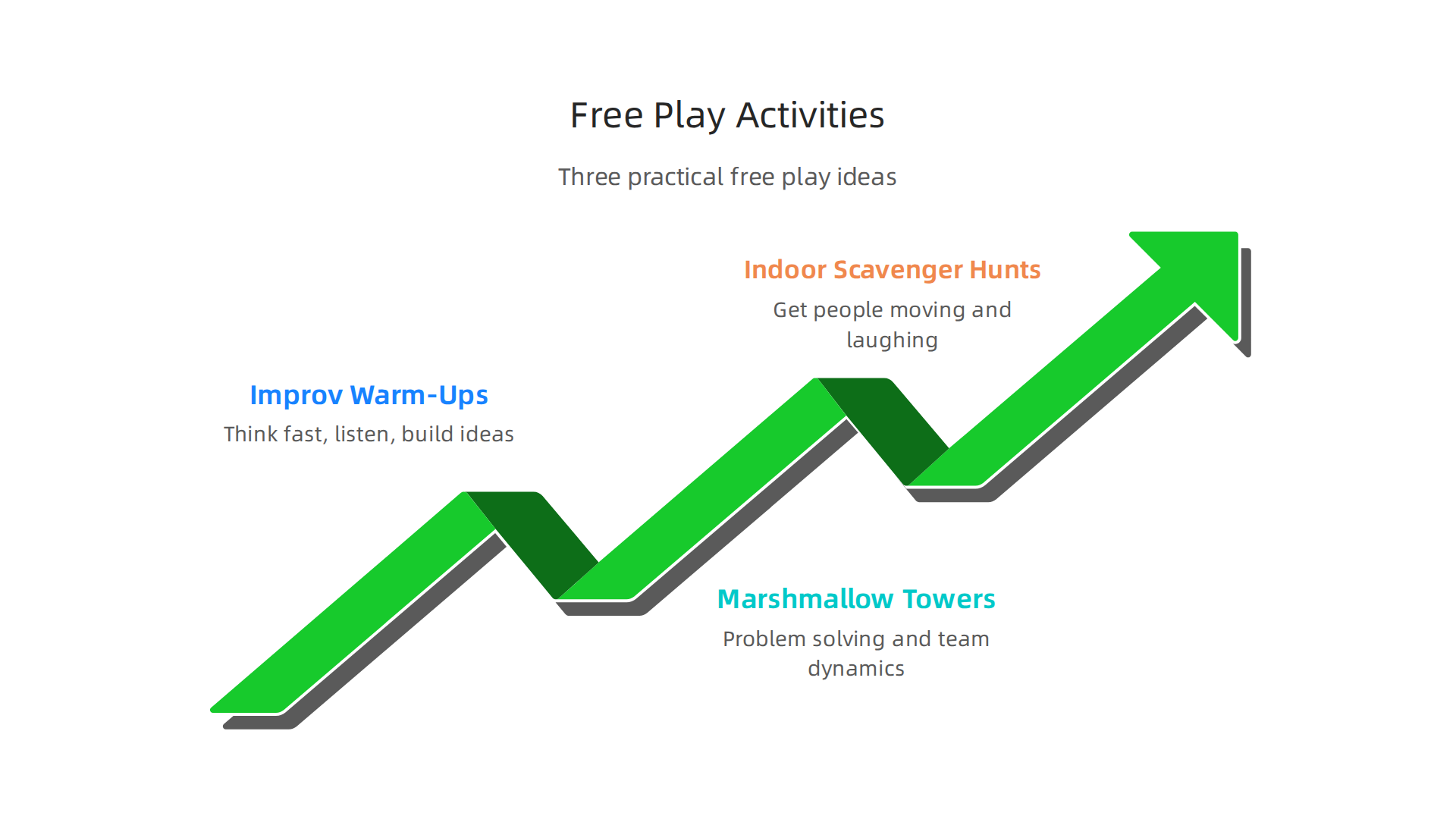
Improv Warm-Ups
Improv games are perfect for free play. They force people to think fast, listen closely, and build on each other’s ideas. And they are hilarious.
Try a simple game called "Yes, And." One person says something like "We are stuck on an elevator." The next person adds "and we have a pet penguin with us." Keep going. The rule is you cannot say no. You have to accept whatever the last person said and add to it.
This game teaches two big things. First, it kills the fear of being wrong. There is no wrong move. Second, it trains people to cooperate instead of compete. A recent guide to free team building exercises explains that improv games help teams communicate more openly and reduce social anxiety.
Improv warm-ups take five minutes. No materials needed. Just a willingness to look a little silly.
Marshmallow Towers
This one sounds simple. Give each team 20 sticks of spaghetti, one yard of tape, one yard of string, and one marshmallow. Tell them to build the tallest tower they can with the marshmallow on top.
Here is the twist. You let them create their own rules. Maybe they can break the spaghetti. Maybe they cannot. Maybe they can use the tape however they want. The group decides together.
This activity teaches a lot about problem solving and team dynamics. Some teams dive in without planning and fail fast. Others plan too long and run out of time. Both approaches teach useful lessons. And because everyone is focused on the silly task of building a pasta tower, real communication happens naturally.
A list of 45 team building games for 2026 highlights that hands on challenges like this boost collaboration better than any lecture ever could.
Indoor Scavenger Hunts
Scavenger hunts work great for free play because they get people moving and laughing. You do not need a big office either. Even a small space works.
Create a list of funny or strange items to find. Examples include something that is older than you, something shaped like a triangle, or something that makes a funny noise. Teams run around and collect as many items as possible in ten minutes.
The beauty of this game is how it levels the playing field. Everyone can contribute. The senior VP who knows where the old files are stored is suddenly a hero. The intern who noticed the weird stapler in the breakroom gets a win. A 2026 guide to indoor team building activities shows that scavenger hunts help teams bond by creating shared goals and lighthearted competition.
The Secret Sauce: Co-Create the Rules
Here is the thing that makes free play actually work. Let the team make the rules.
When you hand people a strict rulebook, it feels like work. But when you say "here is a silly challenge, figure out how to play it together," magic happens. Groups start negotiating. They compromise. They laugh at their own ideas. That is where the real team building lives.
A structured facilitation guide for managers helps make this easier. You do not need to wing it. With a simple setup and a few clear prompts, you can step back and let the team take over.
For more ready-to-run ideas, check out these team building games that actually work for in-person, virtual, and hybrid teams. They give you a full menu of options so you never have to scramble for an idea again.
Embrace Failure on Purpose
Most workplaces punish mistakes. Free play does the opposite. It rewards failure.
In improv, a bad joke is funnier than a good one. In marshmallow towers, a collapsed tower teaches more than a standing one. In scavenger hunts, finding nothing is part of the story.
When you build a culture that celebrates failure during play, people start taking smarter risks at work too. They stop hiding their ideas. They start trying new things. That is the whole point.
This collection of low-prep group games for adults gives you more ways to build that playful culture without a ton of planning.
Want to see what free play looks like in action? Browse curated activities designed for teams just like yours and find your next game in minutes.
Explore Activities
Adapting Free Play for Remote and Hybrid Teams
So the in-person ideas sound great. But what if your team is spread across cities, time zones, or works hybrid? Good news. Free play works just as well online. You just need to adapt the format a little.
Synchronous Virtual Free Play
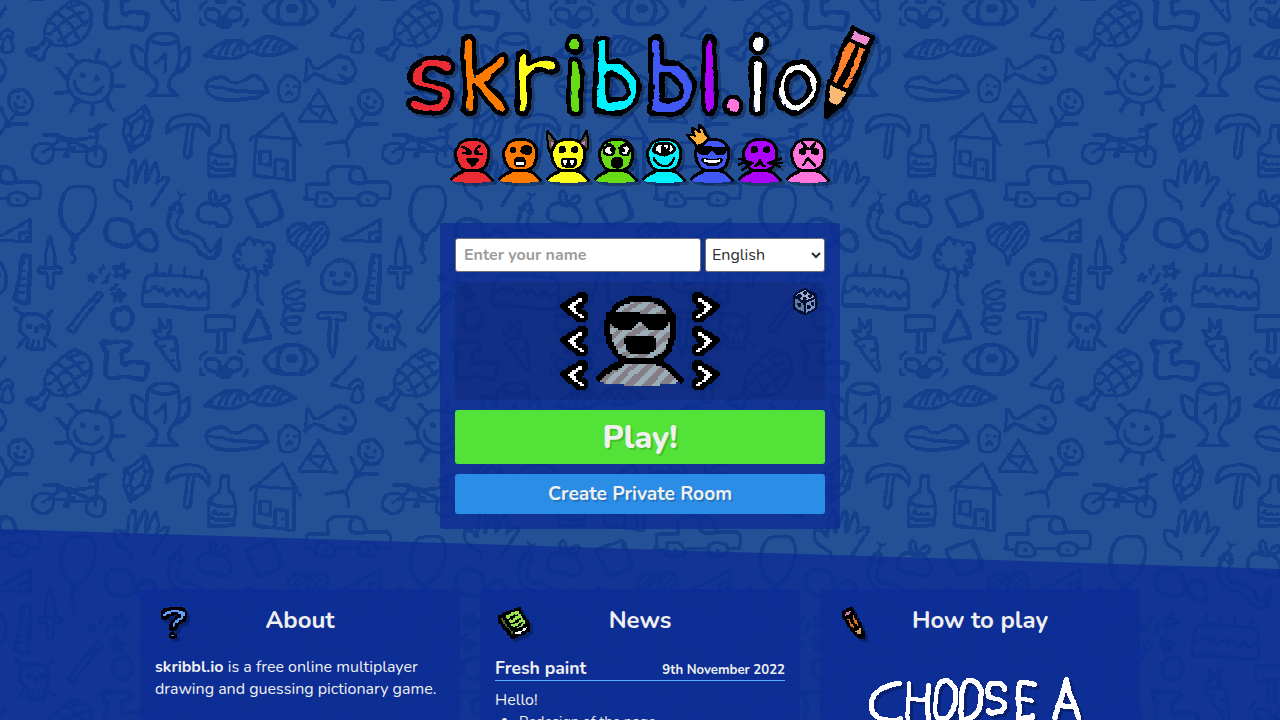
Synchronous play means everyone plays together at the same time over video conferencing. Breakout rooms are your best friend here. They let small groups interact without the awkwardness of a giant call. Try digital drawing games like Skribbl.io where teams take turns guessing doodles.
Collaborative storytelling also works well. Start a sentence like "The CEO walked into the office and found a llama eating the budget reports." Each person adds one line. The story gets wild fast.
A 2026 guide from QuestWorks notes that quick energizers and collaborative challenges keep energy high during virtual sessions. The key is to keep it short. Five to ten minutes per activity. Let the fun be the goal.
Asynchronous Free Play for Different Time Zones
Asynchronous play is a lifesaver when your team spans multiple continents. You can use Slack-based games or shared documents. Try a photo challenge where everyone snaps a picture of something weird at their desk. Or do a "week of random games" where each day a new question or prompt appears in your team chat. People contribute whenever they have time.
Non-cheesy virtual team building activities shared by Deel show that asynchronous games like "Meeting Roulette" help teammates learn about each other without needing to be online at the same moment.
Keep the Free Spirit of Free Play
The magic of free play is the freedom. Online, stick to the same rule. Let the team co create the rules. Let them decide how silly or serious to get. That is where real team building lives, even through a screen.
For more ideas on adapting classic games to a virtual setting, check out these 10 little games for team building that build real connection. They work for in-person and online setups.
If you need ready-to-run virtual activities, browse the curated collection at Activities That Build Teamwork. You will find options that fit any schedule.
Explore Activities
Integrating Free Play into Onboarding and Training Programs
Starting a new job can feel like walking into a party where everyone already knows each other. You smile, nod, and hope someone explains the inside jokes. That anxiety is normal. But it does not have to last.
Here is where free play shines. When you add short, fun team activities to onboarding, new hires build real relationships fast.

They learn team norms without a boring lecture. They relax. And they start to feel like part of the crew from day one.
Why Free Play Works So Well for New Hires
Formal onboarding often packs in paperwork, policies, and presentations. That is important. But it leaves little room for connection. Free play fills that gap. A quick 10 minute game like a collaborative storytelling round or a silly drawing challenge helps new teammates see each other as people, not just job titles. Laughter breaks down walls faster than any icebreaker question ever could.
When you let free play happen naturally, new hires pick up on how the team communicates, what is acceptable, and where the sense of humor lives. That is cultural assimilation without a handbook.
How to Embed Free Play into Your First Week
You do not need to redesign your whole training schedule. Just carve out small windows. Try these ideas:
- Start each morning with a 5 minute energizer. Use a prompt like “What is the strangest thing you have ever eaten?” or a quick online game like Skribbl.io. Keep it light. Let everyone join, including the new hire.
- Pair new hires with a buddy for a mini game. Have them play a two person challenge like “two truths and a lie” or a photo scavenger hunt around the office. This builds one on one trust.
- End training sessions with a group free play wrap up. Ask the team to create a ridiculous story using three random words from the day’s training. This reinforces learning while having fun.
According to Group Dynamix’s 2026 guide on affordable team building activities, short, low cost games are especially effective for new teams because they remove pressure and focus on participation. You do not need fancy equipment. Just a willingness to play.
For a ready to use list of simple games that build connection without prep, check out these 10 low prep group games for adults. They work for any team size.
The Bottom Line
Free play is not a distraction from training. It is the glue that makes training stick. New hires remember how you made them feel. And a little laughter in week one goes a long way toward long term engagement.
If you want more ideas for weaving free play into your onboarding process, explore our curated collection of activities that build teamwork. You will find session ideas designed for HR teams, managers, and facilitators.
Explore Activities
Measuring the Impact of Free Play on Team Dynamics
So you have started using free play in your onboarding and training. People are laughing. New hires seem more relaxed. But how do you know it is actually working? Measuring the impact does not have to be complicated. You just need a mix of honest feedback and simple numbers.
Start with Qualitative Feedback
The easiest way to measure free play is to ask your team. Run a short survey a few weeks after the activities. Ask questions like:
- Did the activity help you trust your teammates more?
- Do you feel more connected to the group after playing together?
- What did you enjoy most?
You can also hold a quick retrospective. Let the team share what worked and what felt awkward. According to a guide on metrics that prove team building success, employee engagement scores and collaboration frequency are reliable indicators. But the real gold is in the stories people tell. When someone says “that game was the first time I felt like I belonged here,” you know free play is doing its job.
Academic research backs this up. A study in the journal Group & Organization Management found that team focused inclusion directly boosts collective creativity. Free play is a fast path to that kind of inclusion.
Track Quantitative Metrics Too
Numbers give you a second layer of proof. Watch for changes in:
- Project completion rates – Do teams finish work faster after regular free play sessions?
- Employee Net Promoter Score (eNPS) – Do employees recommend your workplace more after playing together?
- Turnover rates – Does retention improve over time?
Gallup’s 2026 State of the Global Workplace report showed that only 20% of employees worldwide were engaged in 2025. Free play is a low cost way to move that needle. A simple before and after comparison helps you see the shift.
Use a Simple Framework
Try this approach: measure the same metric (like eNPS or team trust score) before you start free play and again three months later. Use the same survey questions. That comparison tells you exactly what changed.
For more structured ideas on measuring team dynamics, check out this guide on building stronger teams with team work rituals.
Ready to Go Further?
Free play works best when you keep the momentum going. If you want a ready to use collection of activities that build connection and trust, explore our curated activities. You will find games, icebreakers, and full session ideas you can start using tomorrow.
Getting Started: A Framework for Implementing Free Play on a Budget
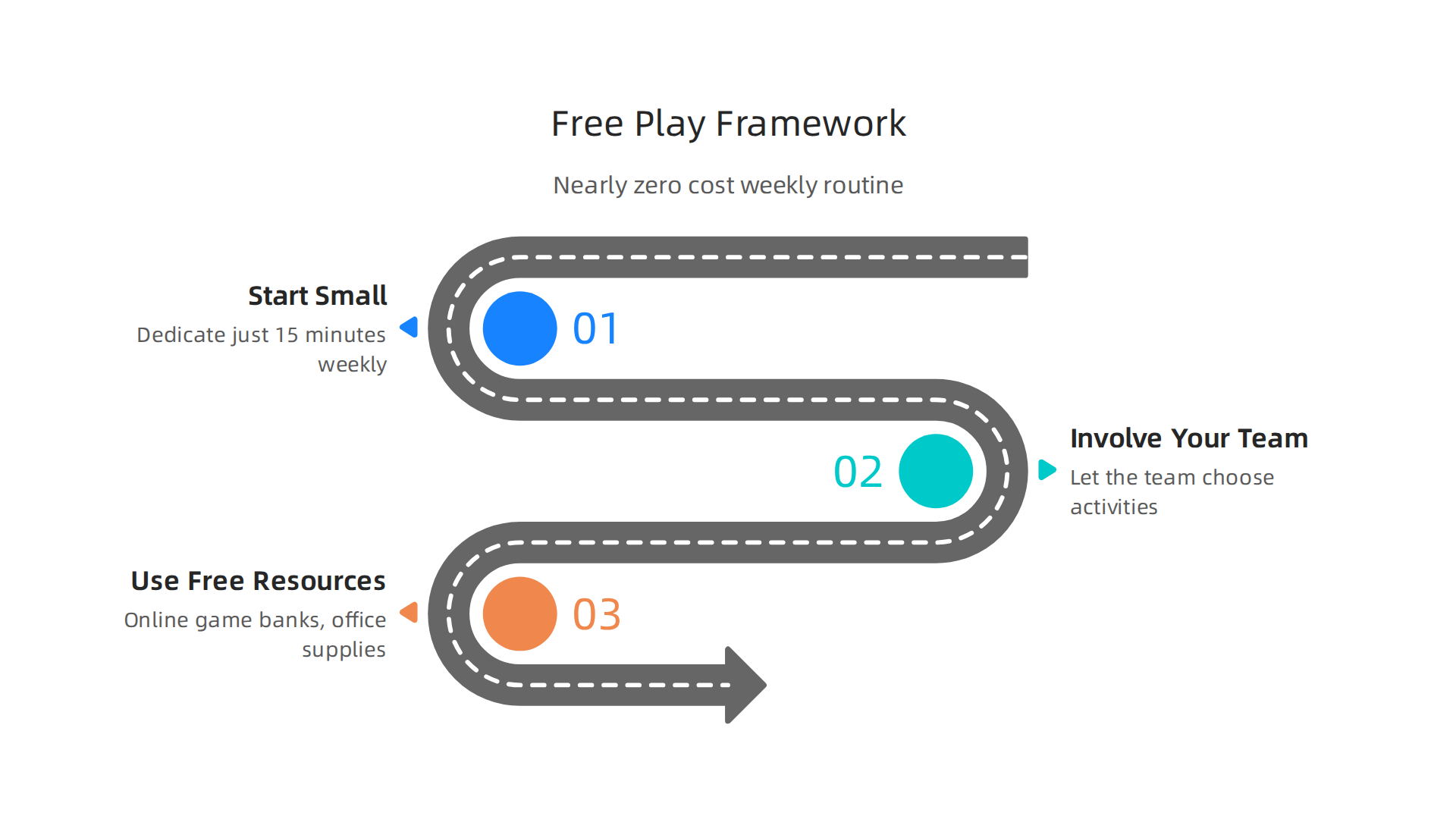
You do not need a huge budget or a fancy off-site retreat to make free play work. In fact, the best approach is the simplest one. Here is a framework that costs nearly zero dollars and takes only a few minutes each week.
Start Small
The biggest mistake is trying to do too much too fast. Instead, dedicate just 15 minutes per week to a single unstructured activity. That is enough time for a quick round of a random game or a short icebreaker.
Keep it consistent. Pick the same day and time each week so the activity becomes a habit. A 15-minute commitment feels small enough that no one will resist it. And over time, those minutes add up to real connection.
Involve Your Team
Here is the thing. If you pick the activities alone, people might not buy in. They might roll their eyes or feel forced to participate. Instead, let the team choose what they want to play.
Ask simple questions like:
- What kind of fun team activities sound good to you?
- Do you prefer fast games or longer challenges?
- Would you rather play in small groups or as a whole team?
When people have a say, they show up with more energy. According to a guide on budget friendly team building ideas, involving the team in the planning stage is one of the best ways to increase engagement.
Use Free Resources
You do not need to buy anything. Seriously. There are plenty of free resources online that give you ready to use activities.
Here are some places to start:
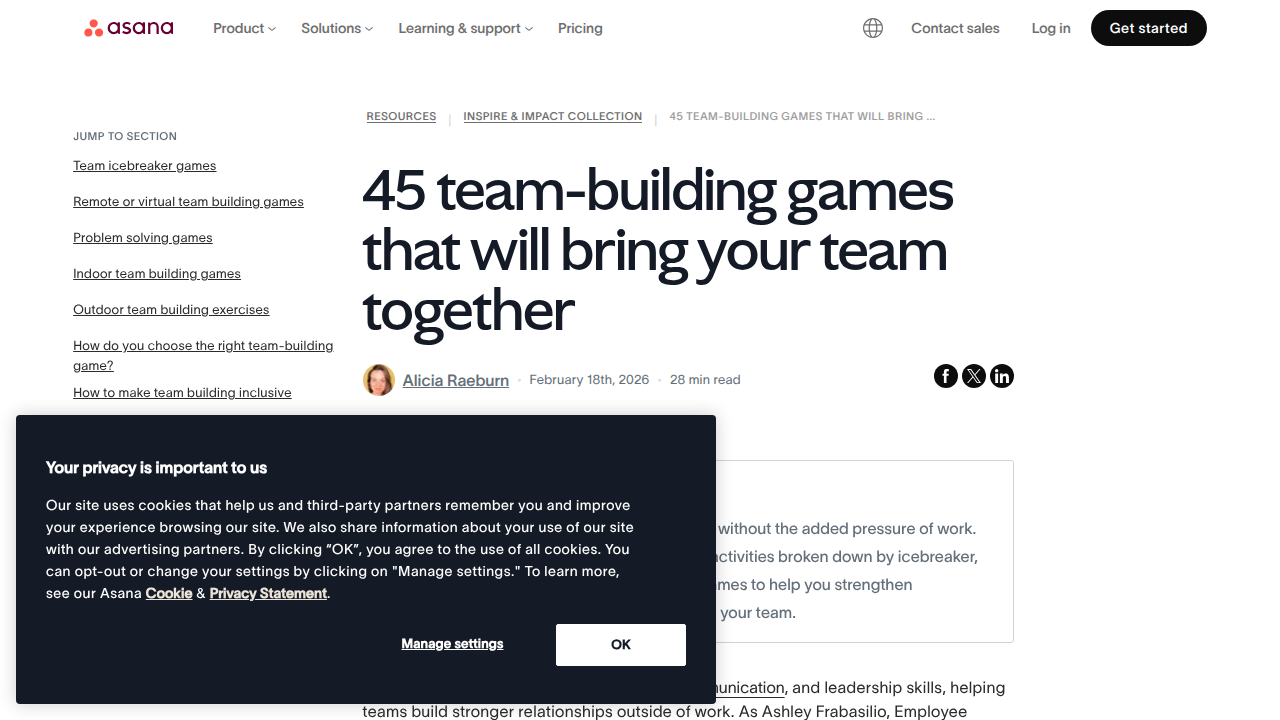
- Online game banks offer hundreds of free icebreakers and challenges. For example, this collection of 45 team building games from Asana includes options for every group size and setting.
- Office supplies like paper, pens, sticky notes, and a whiteboard are all you need for creative games.
- Zero-prop activities require nothing at all. You can run games that use only the people in the room.
For a quick list of simple, low-prep ideas, check out this guide on 10 low-prep group games for adults that build real team connection. Every single activity on that list costs nothing to run.
A Simple Weekly Routine
Here is what a zero-budget free play week looks like:
- Monday morning: 15 minutes. Play a quick round of "Two Truths and a Lie" or a name game.
- Use a free online resource to find a new activity each week.
- Ask for feedback in the last minute. What did people enjoy? What would they like to try next?
That is it. No props. No budget. No stress.
Ready to Start?
You have everything you need to begin. The framework is simple: start small, involve the team, and use free resources. The only thing left is to pick a day and do it.
Explore Activities to find a collection of ready-to-use games and session ideas you can try tomorrow.
Summary
Free play is voluntary, unstructured activity at work—no scores, no pressure—that builds connection, creativity, and psychological safety. This article explains what free play looks like in practical terms, reviews the neuroscience and research that show how play lowers stress and boosts empathy, and demonstrates how simple games break down hierarchy, fight disengagement, and reconnect remote teams. You’ll find easy, low-prep activities for in-person groups (improv, marshmallow towers, scavenger hunts) and adaptations for synchronous or asynchronous virtual teams. The guide also shows how to weave play into onboarding and training, how to measure change with simple qualitative and quantitative metrics, and a budget-friendly weekly routine to make play a habit. Throughout, the emphasis is on letting teams co-create rules, embracing failure as learning, and starting small so play becomes a sustainable team practice.