Build Stronger Teams with a Minute with Maxwell Teamwork Ritual

Does your team feel disconnected? Communication gaps and low engagement hit hard in 2026, especially for remote teams.

You need a simple way to rebuild trust and shared purpose.
John C. Maxwell’s leadership principles offer a real solution. His 17 Indisputable Laws of Teamwork focus on shared vision and placing people in roles where they add the most value.

This framework directly builds stronger teams.
But turning 17 laws into daily habits can feel tough. Here is the simple fix: the "Minute with Maxwell" teamwork ritual. It is a low-cost, repeatable way to cover one principle in just 60 seconds. Day by day, these minutes add up to a powerful team culture.
For hands-on ways to build connection today, try these 10 low-prep group games for adults.
Ready to make principle-based teamwork a daily habit? Browse Activities.
Why John C. Maxwell’s Teamwork Philosophy Matters Today
Your team faces rapid change, digital overload, and communication gaps in 2026. That is exactly when a structured, principle-based approach becomes a game-changer. John C. Maxwell’s 17 Indisputable Laws of Teamwork give you a tested framework built on decades of real leadership observation.
Laws like the Law of the Lid (your leadership ability limits your team’s effectiveness) and the Law of the Big Mo (momentum is a powerful teammate) directly tackle modern challenges like low engagement and siloed work.
The beauty is how easy it is to apply. A minute with maxwell teamwork session fits into existing stand-up meetings or weekly huddles with almost no preparation. You pick one law, discuss it for 60 seconds, and watch your leadership training and soft skills examples come to life in real conversations.

This simple habit turns abstract professional skills into daily action.
For more quick ways to build connection, check out these 10 little games for team building that build real connection.
Ready to make principle-based teamwork a lasting habit? Browse Activities.
The Law of the Lid in Team Context
Here is a hard truth from John C. Maxwell. A team can only go as far as its leader can take it. That is the Law of the Lid. Think about your cross-functional or project-based groups in 2026. If your own leadership ability is low, the whole team hits a ceiling. No amount of effort from the group can break through it.
That is where a minute with maxwell teamwork habit helps. You spend sixty seconds looking inward. Ask yourself one honest question: Where is my lid today? Maybe it is poor delegation. Maybe it is avoiding tough feedback. Whatever it is, naming it is the first step.
By doing this weekly, you turn a known principle from the 17 Indisputable Laws of Teamwork into real leadership training that sticks. You move from theory to action. And you give your team soft skills examples they can see and copy.
Want more simple ways to build better team habits? Try these 10 low-prep group games for adults that build real team connection. Then once your lid lifts, start browsing activities designed for teams like yours.
The Law of Big Mo and Momentum
Ever feel like your team is stuck in neutral? That is the opposite of momentum. In John Maxwell’s 17 laws, momentum is a force multiplier. It can turn small efforts into big results. Read more about the 17 laws of teamwork. Once momentum starts, everything gets easier. Small wins create that push. With a weekly minute with maxwell teamwork habit, you build consistent forward motion. Your professional skills grow without big time commitments. Those tiny principle discussions become soft skills examples your team can feel.
Want more momentum builders? Try these 10 low-prep group games for adults that build real team connection. Then browse activities for ongoing team growth.
The Core Maxwell Principles That Drive Team Effectiveness
Three Maxwell laws act as instant leadership training for any team. Use your minute with maxwell teamwork sessions to explore these.
The Law of the Picture shows that clear vision comes through storytelling and example. Leaders who demonstrate what they expect build stronger direction. This is powerful communication skills training in action.
The Law of the Chain says a team is only as strong as its weakest link. The 17 Indisputable Laws of Teamwork explains that cross-training and peer support strengthen everyone. Helping a struggling teammate is one of the best soft skills examples a leader can model.
The Law of the Catalyst reveals that identifying and empowering key influencers inside the team speeds up positive change.
Your professional skills grow fast when you focus on these core laws. For practical exercises, try these 10 little games for team building. Then Browse activities for more team effectiveness ideas.
Law of the Picture – Communicating Vision
Showing beats telling every time. The Law of the Picture says leaders must model the behavior and vision they expect. If you want your team to collaborate, you have to do it first. People remember what they see far more than what they hear.
For a quick minute with maxwell teamwork exercise, share a real example of the week’s principle in action. Talk about a time you lived that value. It makes the vision real and builds trust faster than any speech.
Try these 10 little games for team building for more quick practice. Then Browse activities to find more ways to strengthen your communication skills training through hands-on exercises.
Law of the Chain – Strength of Connections
Your team is only as strong as its weakest link. That could be a missing skill, a strained relationship, or a gap in communication. Cross-functional pairing helps by connecting strong members with weaker ones to build everyone up. John Maxwell’s teamwork principles remind us that ignoring weak links holds the whole group back.
Try a weekly minute with maxwell teamwork review. Ask: where are we weakest this week? Then create a simple action plan to strengthen that area. Need ideas? Pair teammates using these 10 little games for team building. Then Browse Activities to find exercises that target specific weak spots. It turns a problem into growth.
How to Run a ‘Minute with Maxwell’ Teamwork Session
You don’t need hours of training to grow your team. A minute with maxwell teamwork session works because it is short, focused, and repeatable. Here is the simple structure.
The format:
- Keep it to 5 minutes max
- Cover one principle each week
- The facilitator reads a short quote from Maxwell
- Share a brief real story that connects to it
- End with one reflection question for everyone
No slides, no handouts, no special prep. Just commitment and a willingness to talk. This approach fits right into the idea of microlearning in the workplace where small doses of learning stick better than long lectures.

The session works in person, on a video call, or in a hybrid setup. Push out the question in chat for remote teams or ask for quick round-robin replies when gathered. It turns leadership training into a weekly habit, not a chore.
Want more ways to build connection? Try these 10 little games for team building to pair with your weekly sessions. Browse Activities to find exercises that fit your group size and setting.
Session Structure and Timing
The best time for a minute with maxwell teamwork session is right at the start of a weekly team meeting. As soon as everyone settles in, begin the clock. This short format builds strong professional skills without eating into your main agenda.
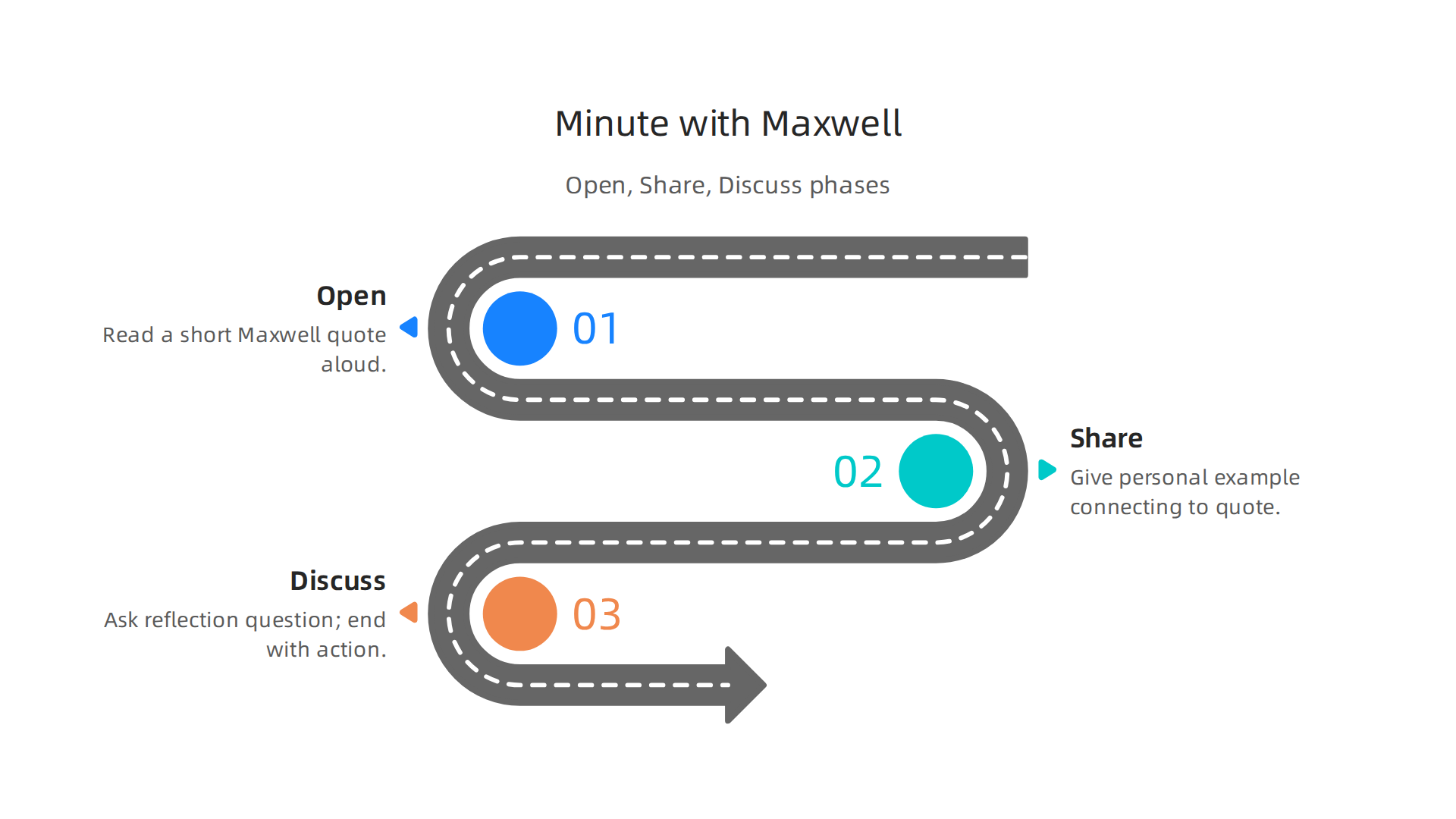
Here is a simple 5 minute structure to follow:
- Open (1 minute): Read a short Maxwell quote out loud.
- Share (2 minutes): Give a real personal example that connects to the quote. This builds communication skills training in a natural way.
- Discuss (2 minutes): Ask one reflection question. Let a couple of people share. End with one simple action step for the team.
This quick format is a perfect example of leadership training that respects everyone’s schedule. For another way to energize your group, pair this session with a quick warmup game. Try these 10 low-prep group games for adults that build real team connection.
Placing learning directly into your team’s natural workflow helps it stick much better. Microlearning experts agree that short, focused lessons lead to better results. Need more ways to keep your team engaged? Browse Activities to explore exercises that fit your group size and setting.
Facilitation Tips
The way you guide a minute with maxwell teamwork session matters just as much as the structure. Start by making it a safe space. Remind everyone there are no wrong answers. This turns a simple quote into a real lesson in soft skills examples.
Next, let different people lead each week. Rotating the facilitator builds professional skills and gives everyone ownership. Use a shared board to collect quotes and takeaways. According to microlearning best practices, content created by team members tends to stick much longer.
For another way to share the lead, check out these 10 little games for team building. Ready to apply these tips? Browse Activities to explore more structured team exercises.
Adapting Maxwell’s Principles for Remote & Hybrid Teams
In 2026, many teams work from home. And that changes everything. Remote teams lack those quick hallway chats where real connection happens. That is exactly why structured conversations like minute with maxwell teamwork are so valuable. They fill the social gap most virtual teams feel.
Here are two simple ways to adapt.
Use breakout rooms. After you share the principle, send people into small video groups for 5 minutes. Let them reflect together. This turns a passive listen into active communication skills training that sticks.
Go asynchronous. Post the principle in Slack or Microsoft Teams. Ask for short voice or video replies.

According to remote work best practices, async communication gives everyone time to think before responding.
Need more ideas for virtual connection? Check out these 10 little games for team building that work great for remote groups.
Ready to bring more structure to your sessions? Browse Activities for exercises designed specifically for hybrid and remote teams.
Virtual Icebreakers Based on Maxwell Concepts
These two icebreakers turn Maxwell’s laws into quick, meaningful activities. They fit perfectly into your minute with Maxwell teamwork sessions and help build real connection.
Law of the Picture. Ask each person to share a screenshot on their screen that represents the team’s current vision. It could be a project dashboard, a photo, or even a funny meme. This gets people talking about where you are headed as a group.
Law of Contribution. Have everyone name one specific way they added value to a colleague last week. This builds appreciation and strengthens soft skills examples like recognition and gratitude. Simple sharing exercises like this boost connection, according to research on virtual team building activities.
Need more quick icebreakers? Try these 10 low-prep group games for adults that work great in virtual settings.
Ready to build a stronger team? Browse Activities for more exercises designed for your next meeting.
Using Asynchronous Channels for Principle Discussions
Not every discussion needs a live meeting. Asynchronous channels let you practice minute with maxwell teamwork without adding meetings. This is a key part of managing virtual teams effectively.
Try these two methods:
- Record a 90-second video. Film a ‘Minute with Maxwell’ and ask your team to comment by end of week. This turns leadership training into a group conversation.
- Start a Monday quote thread. Drop a Maxwell quote in Slack or Teams every Monday. Invite reactions with emojis or short replies. It reinforces professional skills all week.
These async habits build soft skills examples like reflection and communication.
Need more ideas? Check out these 10 low-prep group games for adults for distributed teams.
Ready to apply these? Browse Activities for more exercises.
Measuring the Impact: What Data Says About Principle‑Based Team Building
You might wonder if all these async threads and quote posts really move the needle. Here’s the thing. The data says yes they do.
In 2026, more companies are tracking the real return on their people investments. And the results are clear. Regular, structured team interventions that focus on principles improve trust and collaboration across the board. According to research on team building ROI, organizations that commit to consistent team development see measurable gains in how people work together.
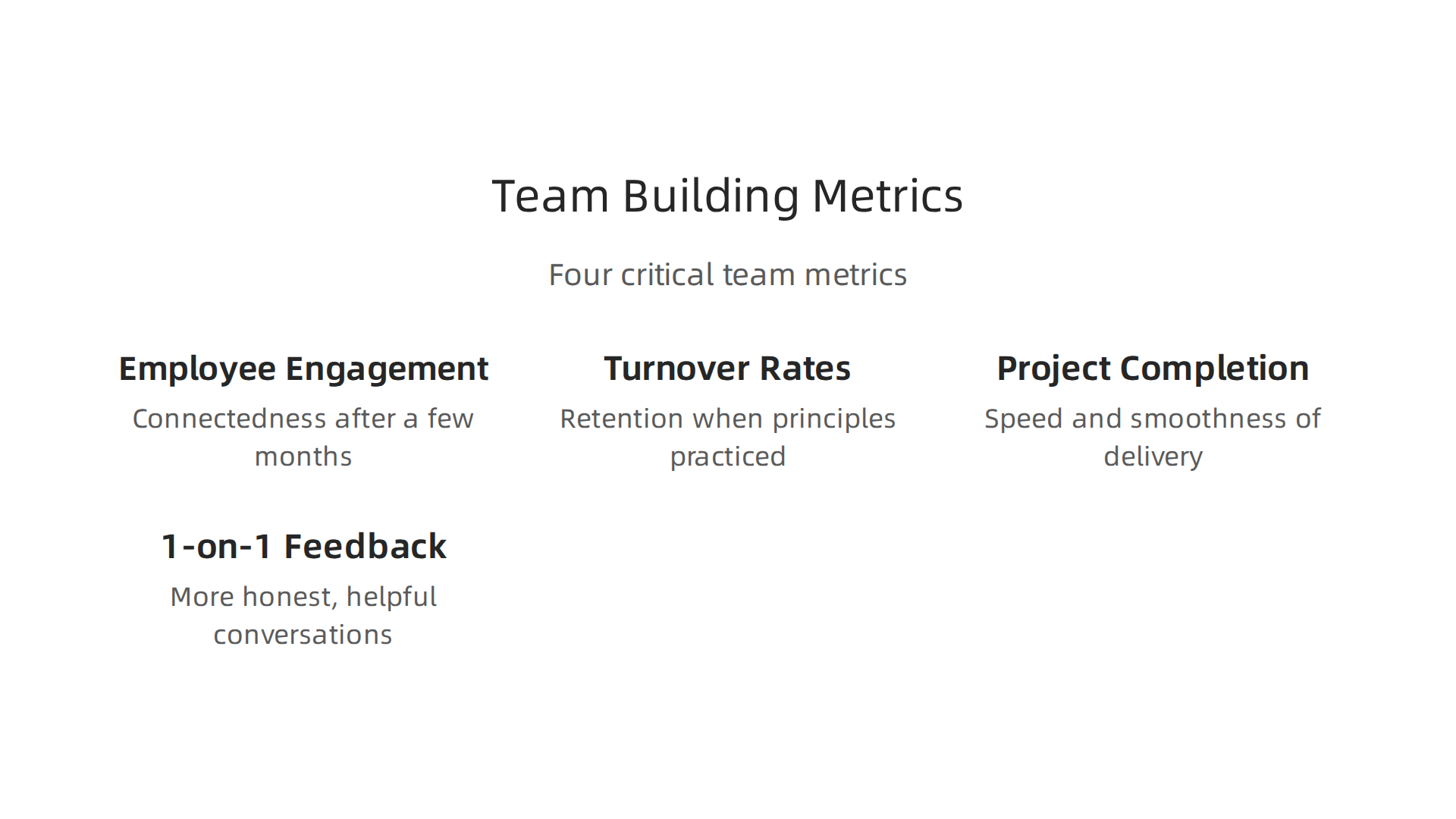
What metrics should you watch? Focus on these four:
- Employee engagement scores. Do people feel more connected after a few months of principle work?
- Turnover rates. Teams that practice shared principles tend to keep their people longer.
- Project completion times. Better communication means faster, smoother work.
- 1-on-1 feedback quality. Are conversations becoming more honest and helpful?
Studies show that leadership training directly lowers turnover and boosts team performance. When you invest in soft skills examples like reflection and clear communication, the whole team benefits. The ROI of team building shows up in reduced costs and higher productivity.
The Minute with Maxwell teamwork framework makes this easy to measure. Every 4 weeks, run a quick pulse survey. Ask your team three simple questions about trust, clarity, and how the principles feel. You can track the trends over time without heavy analysis.
Investing in leaders improves the performance of entire teams. And in 2026, team building is more critical than ever for both remote and in-person groups.
Want to start measuring your team’s progress today? Try some simple team building games that build real connection and track how your scores change over time.
Browse Activities for exercises you can test and measure with your group.
Common Pitfalls When Applying Maxwell’s Principles (and How to Avoid Them)
So you are ready to put the minute with Maxwell teamwork framework to work. Great. But a few common mistakes can stop your progress cold. Here is how to spot them and what to do instead.
Pitfall 1: Focusing only on theory without real application.
It is easy to talk about principles like listening first or adding value. But if every session does not end with a concrete action, nothing changes. To avoid this, end each meeting by asking, "What is one thing we will do differently this week?" Studies show that team building drives measurable gains only when you actually apply the ideas in practice. Pair your discussion with a quick exercise like a 10-minute game that builds real connection to lock in the learning.
Pitfall 2: Inconsistent scheduling – skipping weeks erodes momentum.
When you cancel or postpone, you send a message that teamwork is optional. Trust and habits need steady repetition. Keep a recurring calendar slot, even if it is only 15 minutes. Consistency builds the rhythm your team needs.
Pitfall 3: Forcing participation.
Mandating attendance or making people share feels awkward and can backfire. Instead, lead by example. Share your own thoughts first. Allow people to opt out of speaking. The goal is genuine engagement, not compliance.
Want to avoid these common mistakes? Browse Activities for ready-to-use exercises that make application simple and consistent.
Now that you know what to avoid, here is a simple plan to bring the minute with maxwell teamwork approach to life. This method works well because it uses small, focused sessions. Microlearning fits right into your team’s daily flow without taking up too much time. That is why many companies use short training bursts to build professional skills instead of long workshops.
Weeks 1‑2: Pick and pilot. Choose 8 to 12 Maxwell principles you want your team to practice. Brief a small volunteer group and run a few short sessions with them. Use a quick connection game like those in 10 little games for team building to make the pilot engaging.
Weeks 3‑4: Roll out and listen. Share the plan with your whole team. After each session, ask one question. A simple pulse survey helps you see what is working. Microlearning that puts content right in the flow of work is most effective when you gather quick feedback.
Ongoing: Keep it fresh. Rotate who leads each session. That builds communication skills training for everyone. Create a physical or digital "wall of principles" where the team posts wins and lessons learned. Celebrate small successes to keep momentum high.

Ready to save time? Browse Activities for ready‑to‑use exercises that match this plan perfectly.
Weeks 1‑2: Foundation
Before you launch your minute with maxwell teamwork sessions, spend these first two weeks setting the stage. Start by securing leadership buy‑in. Show your executives how bite‑sized microlearning builds professional skills and soft skills examples that stick. Research shows that delivering training in short, focused formats drives real results see this microlearning guide. Then, create a simple slide deck or document with one Maxwell principle per week plus a reflection prompt. Keep it minimal. This prep makes your leadership training plan clear and repeatable.
For the pilot sessions, add a quick icebreaker from these low‑prep group games for adults to energize the group.
Need ready‑to‑use exercises? Browse Activities that match this setup perfectly.
Weeks 3-4: Deepening
As you move deeper into your minute with maxwell teamwork plan, shift the focus to shared ownership. Ask team members to tell personal stories that connect to each principle. This builds genuine soft skills examples that feel real, not forced. Then, start rotating who leads the session. Giving everyone a turn builds leadership training from within the team. To support this, try these little games for team building that strengthen communication. Research confirms that microlearning works best when it fits naturally into the workday see this guide. Finally, tie each Maxwell principle to a current team project. When your team sees the lesson directly helping with a real challenge, the learning sticks.
Need ready-to-use activities for this phase? Browse Activities that match your team’s next step.
Real-World Examples & Case Studies
Many teams have already tested this approach. A mid-sized tech company added minute with maxwell teamwork to their daily standups. Within six months, their employee net promoter score jumped significantly. Team members reported stronger communication skills training and better soft skills examples in action. This matches findings from real Maxwell case studies where teams saw clear cultural shifts see this case study collection.
A remote startup took a different path. They shared each Maxwell principle as an async Slack message. Team members discussed the idea during their own hours. The result? Stronger connections across different time zones without scheduling conflicts. For teams looking to build connection without extra meetings, these low-prep group games for adults can help.
These stories show that leadership training does not need to be complicated to work well. Browse Activities that match your team’s next step.
Conclusion: Building a Thriving Team One Minute at a Time
Building a thriving team does not require expensive retreats or hours of training every week. The Minute with Maxwell approach is a low-effort, high-impact investment in your team culture. As leadership case studies show, consistent, small inputs lead to lasting cultural shifts.
Why does it work so well? Trust is built through consistency, vulnerability, and shared language. Minute with maxwell teamwork gives your team that exact foundation. Concepts from leadership training and communication skills training become part of your daily dialogue. You start to see real soft skills examples in everyday interactions without forcing anything.
Here is your challenge. Start with one principle this week. Spend just sixty seconds on it during your next standup. Watch how these small moments compound into a stronger, more connected team.
If you want more simple ways to build better bonds without extra meetings, try these low-prep group games for adults alongside your Maxwell moments. Then Browse Activities that pair perfectly with this method for even more team connection.
Summary
Minute with Maxwell is a simple, repeatable teamwork ritual that turns John C. Maxwell’s 17 Indisputable Laws of Teamwork into bite-sized, actionable learning for modern teams. The article explains why principle-based microlearning matters in 2026, outlines a short session format (60 seconds to 5 minutes), and shows how to pilot and scale the habit without heavy prep. It covers core laws like the Law of the Lid, the Law of the Picture, and the Law of the Chain, and gives concrete facilitation tips, remote/hybrid adaptations, and quick icebreakers you can use. You’ll also get a practical rollout plan (Weeks 1–4), ways to measure impact with simple metrics, and common pitfalls to avoid. Real-world examples show measurable benefits in engagement and team performance. After reading, you’ll be able to run consistent, low-cost Maxwell sessions, pair them with quick games, and track whether the habit is improving trust and collaboration.