Unlock Connection and Teamwork with Powerful Group Games
Why group games still matter for teams, classrooms, and families
In 2026, it might seem like our lives are all about screens and busy schedules. But actually, simple group games for adults and even fun activities for kids still play a super important role. Think about it: when do we truly connect with others? Often, it’s when we’re sharing a laugh or working together on a fun challenge.

Group games are like a secret superpower for bringing people closer. They spark real connection and help everyone feel more comfortable, lowering that feeling of being shy or awkward. This is true whether you are planning activities for a work team, leading a classroom, or just trying to have fun with your family. These team games for adults and children give everyone a clear chance to practice talking to each other and working together. This is a big deal for happy groups. For example, some studies show that when companies bring in games, employees feel more productive, and fewer people leave their jobs. One survey from 2026 found that 89% of employees felt more productive, and 52% of HR departments saw better staff retention after starting such activities Office Bingo Search Interest (2019-2026).
The best part? You don’t need a lot of money or fancy equipment for these activities. Well-chosen games can be low-cost and can be changed to fit different ages and places. They are really useful for many situations. You can use them when new people join a team to help them feel welcome, to make meetings more lively, or to help students learn better in a classroom. Even simple ice breaker games for kids can make a big difference in how a group gets along. These kinds of activities are a great way to build strong bonds without a lot of hassle. If you’re looking for simple ways to bring people together, check out these 10 Low Prep Group Games For Adults That Build Real Team Connection to get started.
Why games help: the mechanisms behind engagement and teamwork
When we play games, something special happens in our brains and hearts. It’s not just about having fun, even though that’s a big part of it. Games help us connect and work together in ways that normal talking sometimes can’t. They do this by making it easier to try new things and talk clearly, which are super important for any group.
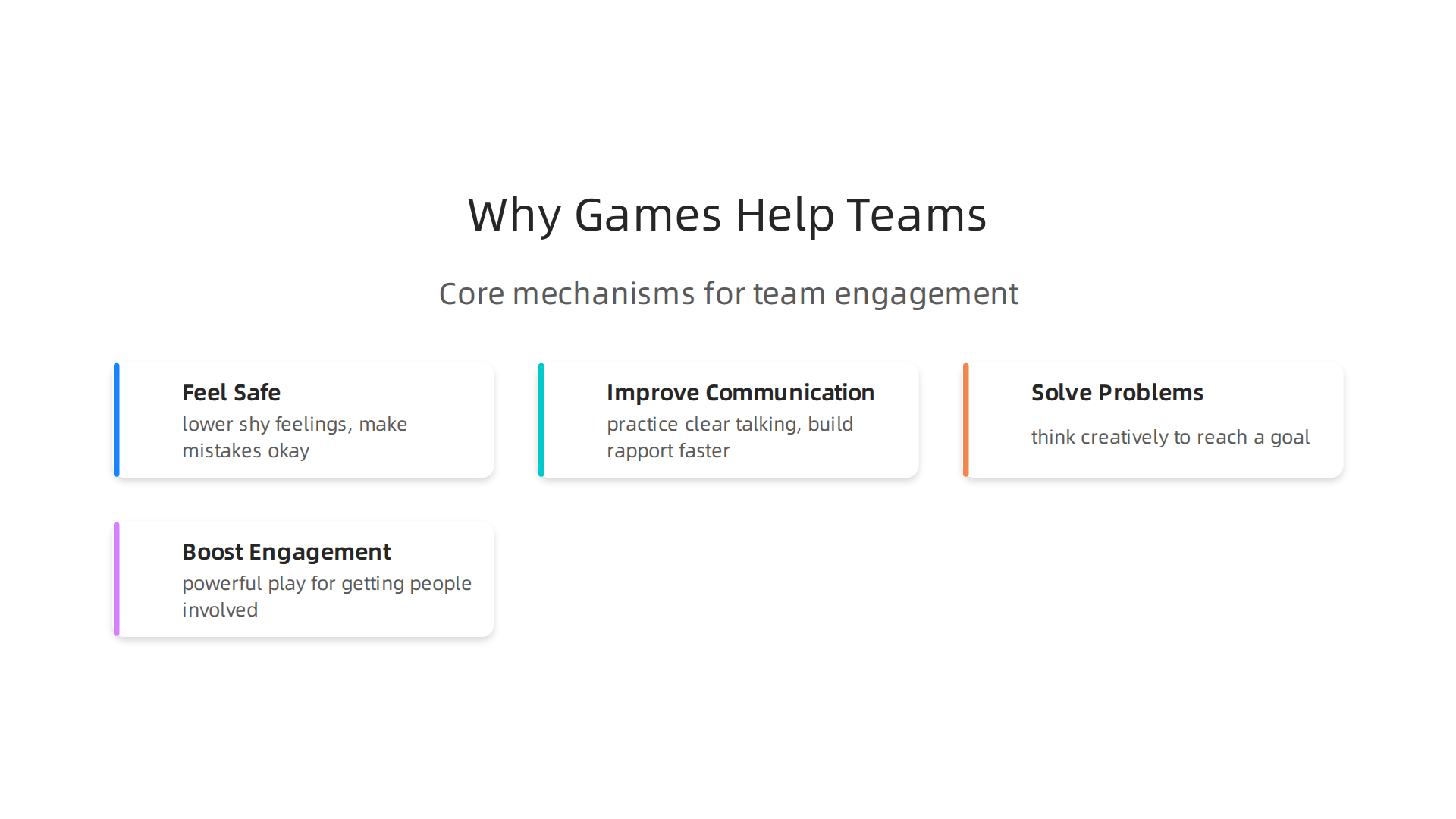
Think about it like this: play helps people feel safe enough to join in. It lowers those shy feelings and makes it okay to make mistakes. This is true whether you are doing simple ice breaker games for kids or more complex games for adults. When we play, we step into a "safe zone" where the rules are clear, but the outcome isn’t scary. This makes us more likely to share ideas and take small risks, which is how we grow and learn to trust each other. Studies have even looked at how games boost student engagement and motivation in learning, showing how powerful play can be for getting people involved Gamification of Spelling Instruction.
One of the best things about group games is how they improve how we talk to each other. When you’re trying to win a game or solve a puzzle together, you have to be very clear with your teammates. This makes everyone practice better communication. It also helps people get to know each other faster. Instead of just small talk, you see how others think and react under a little bit of fun pressure. This quickly builds good feelings and understanding, which is called rapport. These moments are really key for team games for adults because they turn strangers into teammates.
Games are also great for learning how to solve problems together. Many activities require groups to think creatively to reach a goal. This is why you see games used in places like classrooms. Teachers often use unblocked games classroom activities to help students learn important lessons without even realizing it. These kinds of activities make working together feel natural and rewarding. If you want to dive deeper into how playful activities can spark new ideas, check out How Free Sandbox Games Boost Team Creativity and Collaboration.
So, the next time you gather a group, remember that playing a simple game isn’t just a waste of time. It’s a powerful tool that helps people relax, talk better, and solve problems as a team. It’s about building strong bonds that help everyone feel happier and more productive.
If you’re looking for another fun way to build connection and shared experience within a group, consider sharing a light-hearted story. Give Your Team a Laugh with a clever sci-fi comedy as a fun shared read.
Now that we understand why games are good, let’s look at which ones work best for grown-ups when you’re all together in the same room. Finding the right games for adults can make a big difference, whether you need a quick way to say hello or something deeper to build real team connections. We’ll explore different kinds of activities, giving you simple steps for each. When picking team games for adults, it’s smart to think about what you want to achieve. According to the 2026 Global Meetings & Events Forecast, using best practices is important for successful group activities.
Quick Icebreakers (5-10 minutes)
These games for adults are perfect for the start of a meeting or event. They help everyone relax and get to know each other fast.
1. Two Truths and a Lie
- Goal: A fun way to share facts and laugh together.
- How to Play: Each person thinks of three things about themselves. Two are true, and one is a lie. They share them, and the group guesses which one is the lie.
- Group Size: Best with 5 to 20 people.
- Materials: None needed, but people can write ideas down if they like.
- Time: About 5 to 10 minutes, depending on the group size.
- Tip for Leader: Tell everyone to make their lie sound believable and their truths a little surprising for extra fun.
2. One Word Introduction
- Goal: A very quick way for people to introduce themselves or share a feeling.
- How to Play: Go around the room. Each person says just one word that describes how they feel right now, or one word about their hopes for the day.
- Group Size: Any size, even large groups.
- Materials: None.
- Time: 2-5 minutes.
- Tip for Leader: Keep it moving quickly. No long stories, just one word.
Mid-Meeting Energizers (10-20 minutes)
Sometimes, meetings can feel long. These team games for adults are great for waking everyone up and getting brains working again.
1. Human Knot
- Goal: Improve communication and problem-solving through touch and laughter.
- How to Play: Have 8 to 12 people stand in a circle, facing each other. Everyone puts their right hand out and grabs a hand across the circle. Then, everyone puts their left hand out and grabs a different hand across the circle. The goal is to untangle the "knot" without letting go of anyone’s hands.
- Group Size: 8-12 people per knot. If you have more people, make multiple small groups.
- Materials: None.
- Time: 10-15 minutes.
- Tip for Leader: Tell people to be gentle. This game is all about talking through the problem, not pulling too hard.
2. Blind Drawing
- Goal: Boost clear communication and active listening.
- How to Play: Divide into pairs. Sit back-to-back. One person (the "describer") gets a simple picture (like a house, a tree, a simple shape). The other person (the "artist") gets a blank piece of paper and a pen. The describer tells the artist how to draw the picture without saying what the picture is. The artist cannot ask questions.
- Group Size: Pairs.
- Materials: Simple pictures, paper, pens or pencils.
- Time: 10-15 minutes (5-7 minutes for drawing, then compare).
- Tip for Leader: Emphasize that the describer must use very exact language. It’s harder than it sounds!
Deep-Bonding Activities (30+ minutes)
When you want to build stronger bonds and tackle bigger challenges, these longer games for adults are perfect. They often need more planning and focus.
1. Team Scavenger Hunt
- Goal: Encourage teamwork, problem-solving, and exploring a new area.
- How to Play: Create a list of items or clues for teams to find or solve around your location (office, park, neighborhood). Teams work together to complete the list, often taking photos as proof.
- Group Size: 4-6 people per team.
- Materials: Clue list, pens, paper, smartphones for photos.
- Time: 30-60 minutes, plus time for wrap-up.
- Tip for Leader: Make the clues fun and varied. Have a clear finish line and maybe a small prize. For more ideas on how to set up a great hunt, check out how to Run a Team Building Scavenger Hunt That Builds Real Connection and Problem Solving Skills.
2. Marshmallow Challenge
- Goal: Foster creative problem-solving, rapid testing of ideas, and collaboration under a fun time limit.
- How to Play: Each small team gets 20 pieces of spaghetti, one yard of tape, one yard of string, and one marshmallow. The goal is to build the tallest free-standing structure possible in 18 minutes, with the entire marshmallow on top.
- Group Size: 4-6 people per team.
- Materials: Spaghetti, tape, string, marshmallows (one set per team).
- Time: 18 minutes for building, 5-10 minutes for measuring and discussion.
- Tip for Leader: Show an example of the materials. Remind teams the marshmallow must be on top and the structure must stand by itself. This is a classic
team games for adultsactivity.
To find even more ideas for connecting your group, consider looking at these 10 Low Prep Group Games for Adults That Build Real Team Connection.
When you lead these games for adults, remember a few best practices. Always explain the rules clearly. Make sure everyone feels safe and welcome to join in. After the game, talk about what happened. Ask "What was easy?" "What was hard?" "What did we learn?" This helps turn fun into real learning for the team. This kind of thoughtful planning is part of what makes team games for adults truly effective.
When we think about games, it’s easy to just picture fun and laughter. But games are also very powerful tools for learning, especially for kids in classrooms. Just like how we use team games for adults to teach important skills, we can use games to help kids learn things like talking to each other, working together, and solving problems.
How Games Help Kids Learn
Games are great because they make learning exciting. When kids play, they don’t even realize they’re practicing important skills. Here’s how games can link to what kids need to learn:
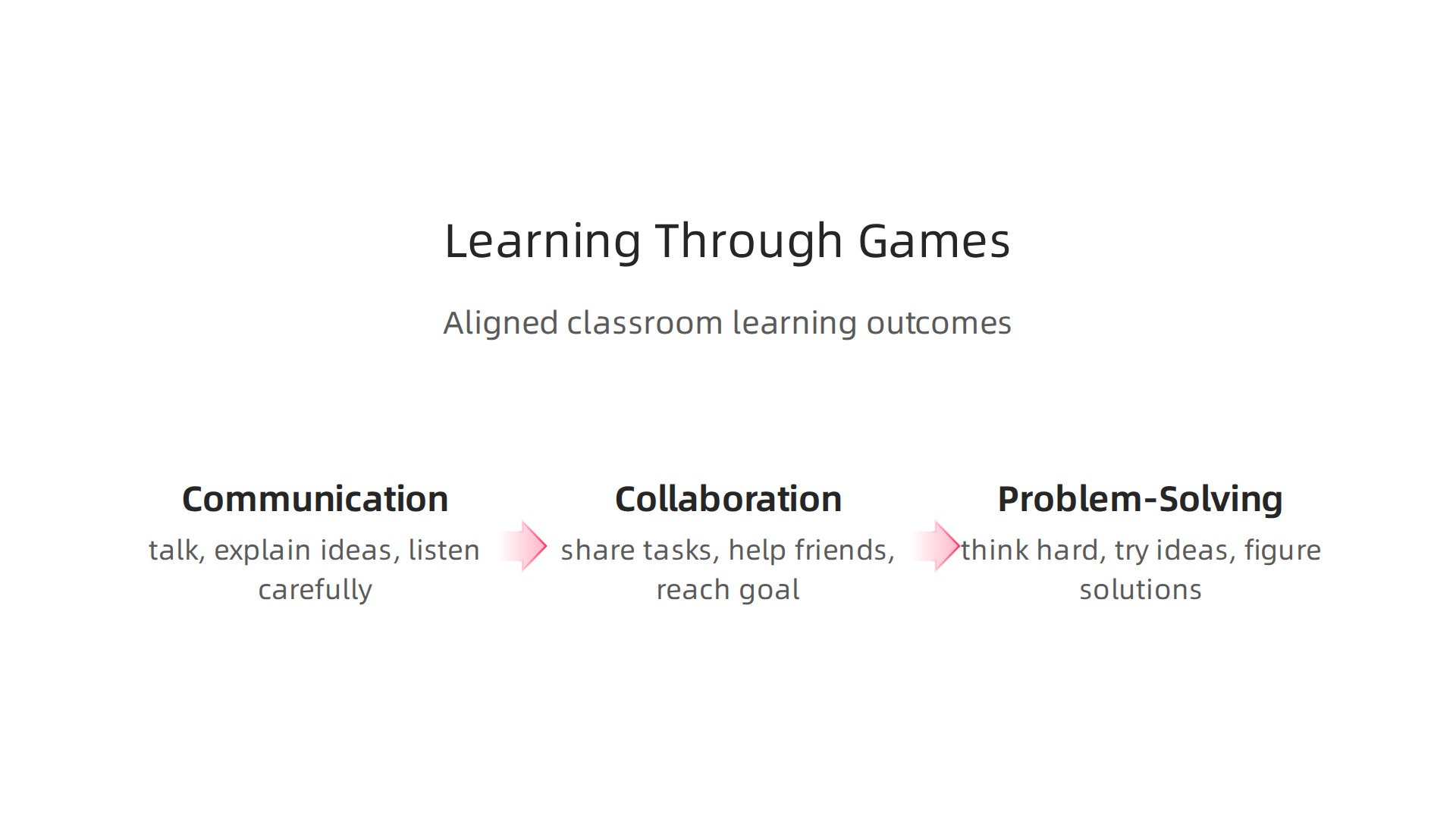
- Communication: Many games ask kids to talk to each other, explain ideas, or listen carefully. This helps them get better at sharing their thoughts and understanding others.
- Collaboration: Working together in a game teaches kids how to share tasks, help friends, and reach a goal as a team. This is a super important skill for school and life.
- Problem-Solving: Games often have challenges or puzzles. Kids have to think hard, try different ideas, and figure out solutions. This makes their brains stronger for solving real-life problems.
Using games in school can also make kids more interested in learning.

It can help them feel happy and excited to be in class, which is a big deal for helping them do well. Studies show that making learning feel like a game, or "gamification," can really help students get involved and learn new things, even for subjects like spelling. You can learn more about this idea in studies on Gamification of Spelling Instruction.
Fun Games for Classrooms
Here are some simple group games kids can play in school, no matter how many students you have.
1. Story Starters
- Goal: Improve creative thinking and speaking skills.
- How to Play: The teacher starts a story with one sentence, like "Once upon a time, a small mouse found a giant cheese wheel." Then, each student adds one sentence to keep the story going.
- Group Size: Any size.
- Materials: None.
- Learning Link: Teaches kids to listen to others and build on ideas.
2. Memory Match with Learning Cards
- Goal: Help kids remember facts or words from a lesson.
- How to Play: Make pairs of cards. One card has a question or a picture, and the other has the answer or a matching picture. Mix them up face down. Kids take turns flipping two cards to find a match.
- Group Size: Small groups (2-4 kids).
- Materials: Index cards with words, pictures, or math problems.
- Learning Link: Great for reviewing new words, math facts, or history terms.
3. Human Bingo
- Goal: A friendly ice breaker games for kids to help students learn about each other.
- How to Play: Give each child a "bingo" card with squares that say things like "Has a pet dog," "Likes to draw," "Can speak another language." Kids walk around the room and ask their classmates questions to find someone who fits each square. When they find someone, that person signs the square.
- Group Size: Any size.
- Materials: Bingo cards, pens.
- Learning Link: Encourages talking to new people and finding common ground.
Making Games Fair for Everyone
When picking games for kids, it’s really important to think about everyone in the class. Some kids might need a little extra help or have special needs. It’s good to choose [games for adults] or kids that can be changed a little so everyone can join in and feel good about playing. For example, some games can be played online or on a computer. There are many fun [unblocked games classroom] friendly options that kids can play if they finish their work early, and these can sometimes be adjusted for different needs. Being thoughtful about how games are designed for all people is very important, as discussed in Accessibility in Educational Games.
Making sure games are welcoming for everyone helps build a happy and fair classroom. If you want a quick, fun way to get kids talking and laughing, consider a lighthearted activity. Need a Lighter Team Idea? A funny shared story can spark conversation without feeling forced.
4) Adapting in-person games for remote and hybrid teams
A funny shared story can spark conversation without feeling forced. This idea of connecting through shared experiences is super important, especially for teams that aren’t always together.
Many grown-up teams in 2026 work from different places, which means they are remote or hybrid. This brings new challenges for fun and team building. You can’t just play the same games for adults you would in person. Things like slow internet, called latency, can make quick physical games tricky. Also, looking at a screen all day can make people tired, which we call screen fatigue. Because of this, choosing the right team games for adults for online play is important.
The trick is to find games that work well even with these online challenges. Look for games that are simple to explain and don’t need super-fast reactions.

Quick virtual ice breakers and word games are great examples. Many online tools offer ways to play games like Pictionary or charades virtually, letting everyone draw or act out words for their team. These kinds of activities help bring people together, no matter where they are. You can find many ideas for virtual team-building activities that everyone can enjoy to get your team laughing.
Adapting games for remote teams doesn’t have to be hard. Sometimes, just a few small changes can turn an in-person favorite into a virtual hit. For instance, a "show and tell" where people bring objects from home can become a fun virtual activity. Or, you could have a "virtual desk decorating contest" where everyone shares their unique workspace setup. These creative ideas help keep teams connected and boost morale. Experts often suggest that these easy-to-do five-minute virtual team building activities can be added to any meeting to make it more engaging.
Focus on games that encourage talking, shared laughter, and working towards a simple goal. Even if it’s just for a few minutes, these kinds of games for adults help build trust and make everyone feel more like a team. If your team is looking to make online gatherings more fun, thinking about games designed for the virtual space is a smart move. Exploring how free play team building activities that build trust and connection can be adapted can be very helpful.
If you want to give your team a laugh and a fun shared experience, use a clever sci-fi comedy as a fun shared read. Give Your Team a Laugh.
5) How to choose and facilitate games: inclusion, safety, timing, and budgets
Choosing the right games for adults for your team or group goes beyond just picking something fun. It’s about thinking smart before you play. When planning, you should always ask yourself a few key questions. These questions help make sure everyone has a good time and that the activity actually helps your group.
Picking Games with a Purpose
First, think about why you’re playing the game. What do you hope to achieve? Do you want people to laugh, learn something new, or work better together? Experts suggest that programs should focus on clear goals and review them carefully before starting any activity, similar to how adult education programs set guidelines for success in 2026. This idea of picking games with a purpose is called "goals-first selection." If you want to build trust, you’d pick different team games for adults than if you just want to lighten the mood. Understanding your goal helps you choose wisely. For more ideas, you can explore 10 low prep group games for adults that build real team connection.
Thinking About Time and Money
Next, consider how much time and money you have. Some games for adults need special supplies or a big space, while others need very little. You might have a big budget and a whole day, or you might only have 15 minutes and no money to spend. There are many fun options for all situations. Planning with clear timelines is a best practice for any group event.
Making Sure Everyone Can Play
This is super important: make sure the game includes everyone. This means thinking about accessibility and inclusion. Imagine someone with a broken leg, or someone who can’t hear well, or someone who is shy. Can they still join in and have fun? Good games don’t leave anyone out. In 2026, many resources, like the Game Accessibility Guidelines, help designers make sure games are for everyone. Also, there are guidelines and frameworks to help teams review how to include everyone in activities. For example, some rules explain how websites and apps should be easy for people with disabilities to use. This kind of thoughtful design helps create truly Inclusive Spaces Playbook – February 2026 for all.
When you’re picking an activity, ask:
- Does it need a lot of physical movement?
- Does it require quick reactions?
- Can people with different abilities participate easily?
- Is it fun for introverted (shy) and extroverted (outgoing) people?
Choosing activities that are adaptable is key. You want to avoid any games for adults that might make someone feel left out or uncomfortable.
How to Lead the Game
Once you’ve picked a game, how you lead it makes a big difference. This is called facilitation.
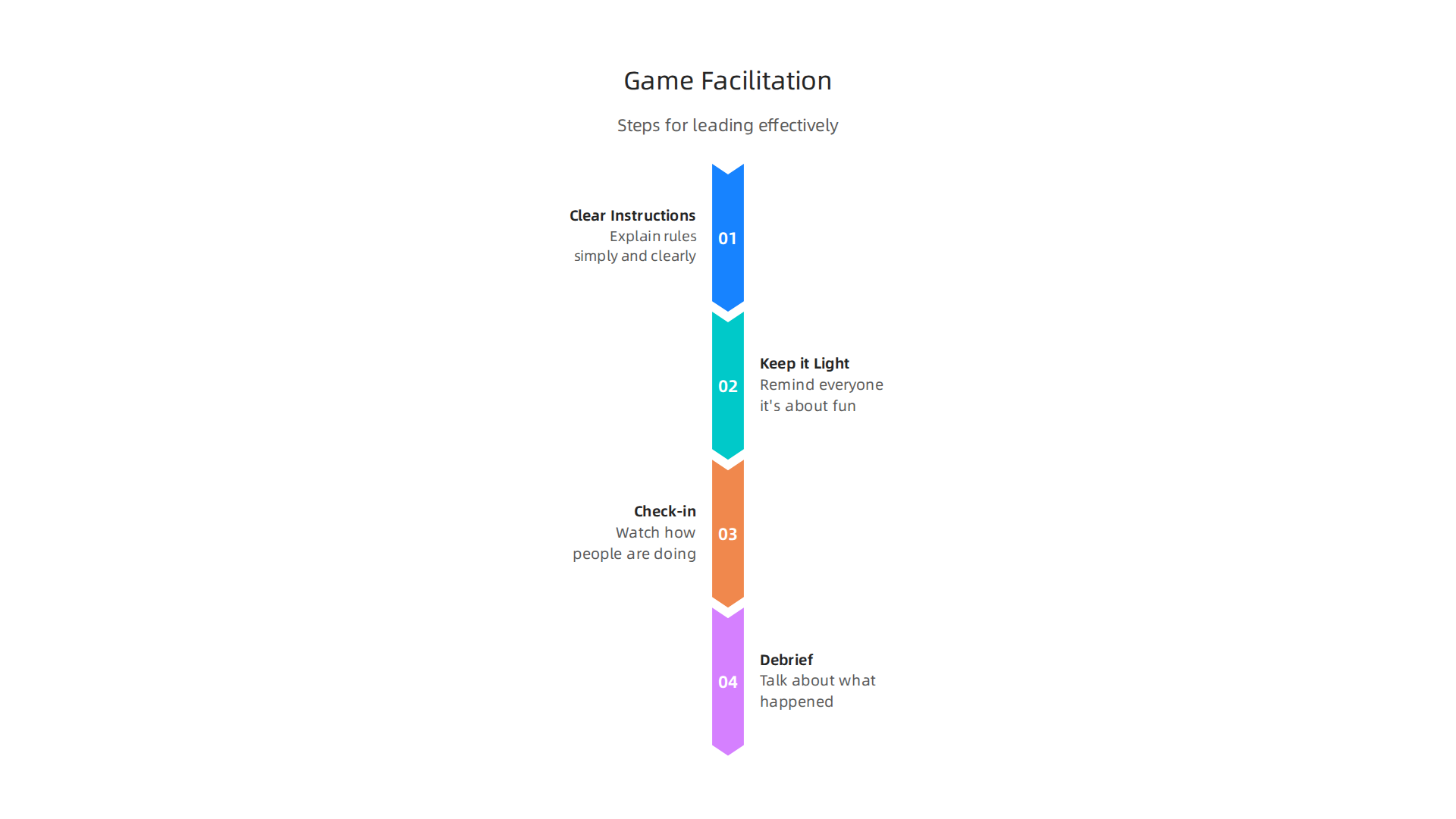
- Clear Instructions: Explain the rules simply and clearly. Don’t rush. Let people ask questions.
- Keep it Light: Remind everyone it’s about fun, not perfection.
- Check-in: Watch how people are doing. If someone looks uncomfortable, you can gently offer them a way to step back or change their role.
- Debrief: After the game, talk about it. Ask questions like:
- What was fun about that game?
- What did we learn about working together?
- How did it feel to be part of the team?
This helps turn a fun game into a valuable learning moment. Thinking about these points helps ensure that team games for adults truly benefit everyone involved.
A funny shared story can spark conversation without feeling forced. Need a Lighter Team Idea? Need a Lighter Team Idea?
After you’ve led games for adults and everyone has had fun, the next step is to see if your efforts made a difference. How do you know if the activities truly helped your team or group? Measuring the impact doesn’t have to be hard. You can use simple ways to check if the games achieved their purpose and then plan activities to keep the good feelings going.
Easy Ways to Measure What Happened
You don’t need a lot of fancy tools to see if your team games for adults were a hit. Here are some simple methods:
- Participation Rates: This is the easiest one. Just notice how many people joined in and how much they took part. Did most people jump right in? Or did some hold back? High participation usually means people felt comfortable and engaged.
- Self-Reported Engagement: Ask people directly how they felt. You can do this with a quick thumbs-up/thumbs-down, a short anonymous survey, or by simply asking everyone to share one word about their experience. People often report higher productivity and better retention when engaging in such activities, according to Industry survey data on productivity and retention from 2026.
- Quick Questions: After a game, use prompts like:
- "What was one good thing that happened in that game?"
- "What did you learn about our team?"
- "How could we use what we learned today in our daily work?"
These questions help people think about the game’s deeper meaning. Even if you’re doinggroup games kidsplay, asking simple questions afterwards helps.
Gathering this kind of feedback gives you a clear picture of what worked well and what might need changing next time.
Keeping the Good Energy Going with Follow-Up Activities
The benefits of games for adults shouldn’t end when the activity does. To make sure the learning sticks and the positive energy continues, plan some follow-up activities. These help reinforce what was learned and keep the team’s momentum.
- Connect Back to Learning: Refer to the game experience in future meetings or conversations. For example, "Remember how we solved that puzzle in the game? We can use that same teamwork here." This reminds everyone of the shared experience and its lessons.
- Simple Challenges: Give the team a small, easy challenge related to the game’s goal. If the game was about better communication, suggest that everyone try one new way to communicate more clearly that week.
- Share Stories: Encourage people to share quick stories about how they used a skill from the game in their real work or personal lives. This builds on the good feelings and shows the practical side of play. For example, some
team games for adultshelp improve important abilities. To learn more about how skills developed in games translate to real life, check out Transferable Skills 2026 What Employers Look For And How To Develop Them. - Regular Check-ins: Briefly ask in future team gatherings if anyone has used a skill or felt more connected since the last game session. Just a few minutes can reinforce the impact.
By thinking about how to measure the fun and learning, and then planning follow-ups, you make sure your games aren’t just one-time events. They become part of an ongoing effort to build a stronger, happier, and more effective team.
Summary
This article explains why simple group games still matter for teams, classrooms, and families, showing how play builds connection, communication, and problem-solving skills. It covers the psychological and practical mechanisms behind engagement, then gives concrete game ideas for different timeframes — quick icebreakers, mid-meeting energizers, and longer deep-bonding challenges — with clear goals, group sizes, materials, and facilitation tips. The piece also shows how games help children learn, how to adapt activities for remote and hybrid teams, and how to choose inclusive, budget-friendly options. Finally, it outlines easy ways to measure impact (participation, quick surveys, follow-ups) so play becomes ongoing learning rather than a one-off event. After reading, you’ll know which games to pick, how to run them safely and inclusively, and how to keep the benefits alive in future meetings and classrooms.